
——徐霞客:一个人,一双脚,三十年
Why a man who "failed" at the imperial exam became China's greatest traveler.
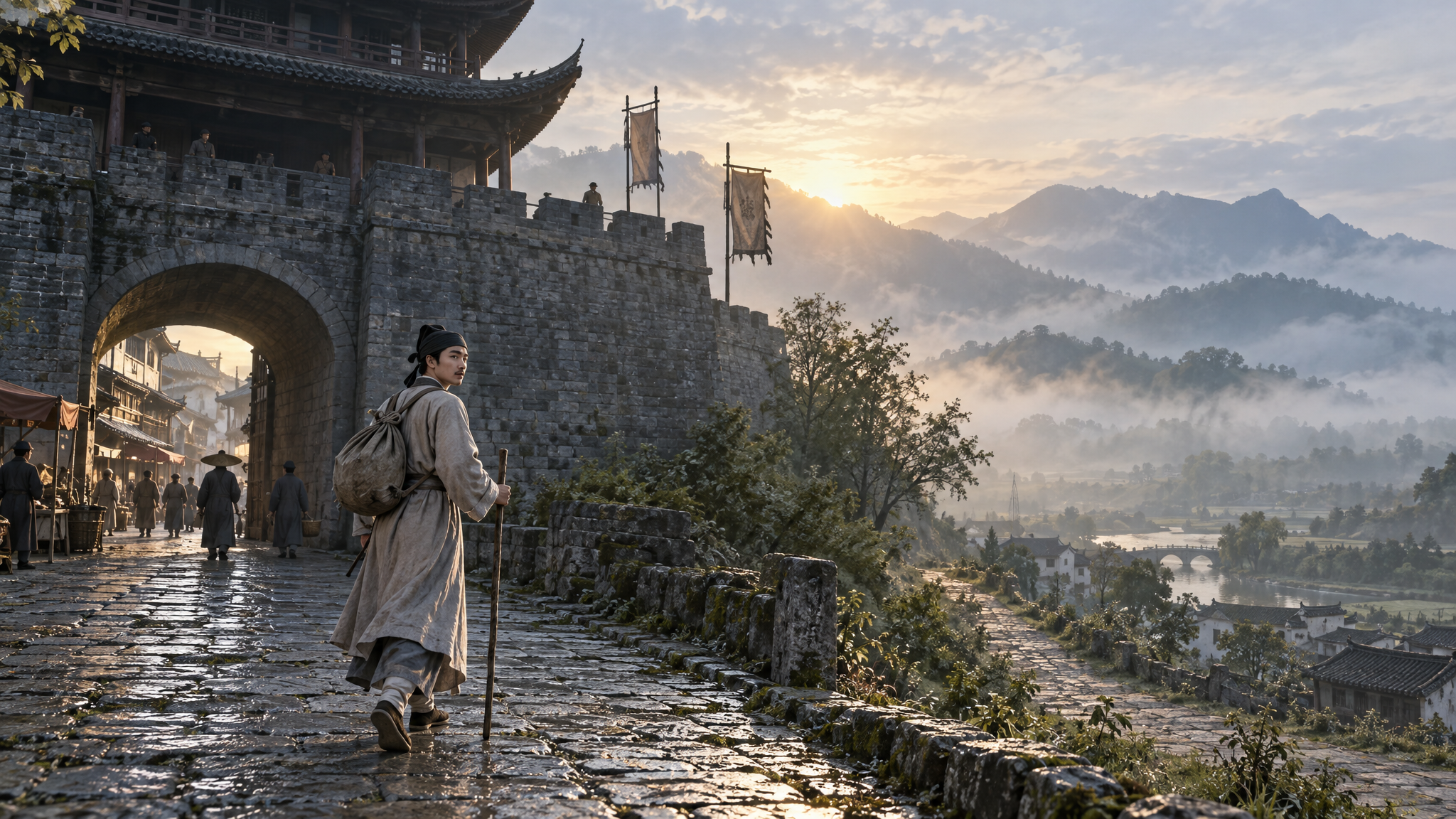
公元 1613 年 5 月 19 日,清晨,浙江宁海西门。
On the morning of May 19, 1613, a twenty-six-year-old man walked out of the west gate of Ninghai, a small coastal county in eastern China, and headed for the Tiantai Mountains.
一个二十六岁的年轻人走出城门,向东往天台山去。头天夜里似乎有雨,这天早上却放晴了。他在日记本上写道:
It had rained the night before, but the sky had cleared. In his diary he wrote:
"云散日朗,人意山光,俱有喜态。" "The clouds parted and the sun came out. The light on the mountains and the mood in my heart were both full of joy." 云散了,日光清朗,人的心情和满山的景色,都带着欢喜。
It is the first surviving line of what would become one of the greatest travel books ever written: a diary of more than 600,000 Chinese characters, kept over three decades, by a man known to history as Xu Xiake (SHOO shyah-kuh). Four hundred years later, China made the date of his departure, May 19, its national Tourism Day. A traveler's first step became a country's holiday.
这是他现存六十多万字游记的第一句话。这个叫徐弘祖、号霞客的年轻人不会知道,这只是一个开始。此后的三十多年,他会一直走下去,走到双腿再也无法站立为止。四百多年后,中国把他出发的这一天——5 月 19 日——定为了"中国旅游日"。
一个旅行者出发的日子,成了一个国家的纪念日。
被写好的"标准人生"
The script he refused
徐霞客的人生选择有多惊人,得先看看他那个时代的标准答案。
To understand how radical that first step was, you need to know the script he tore up.
明朝的中国,一个读书人的人生剧本是提前写好的:开蒙,读四书五经,参加县试、府试、院试,考中秀才;再考乡试、会试、殿试,中举人、中进士;然后做官,光宗耀祖。这是唯一被整个社会承认的成功之路。整个帝国最聪明的头脑,都挤在这座独木桥上。
In Ming-dynasty China, a scholar's life came pre-written. You studied the Confucian classics from childhood. You sat the imperial examinations — county level, provincial level, and finally the palace examination in Beijing. You passed, you became an official, and you brought honor to your family line. This was the only road to success the empire recognized. The brightest minds of the world's most populous empire were all crowded onto this single narrow bridge.
徐霞客 1587 年出生在江苏江阴一个富裕的书香之家,天资聪颖,完全有资格挤这座桥。十五岁那年,他参加过一次童子试,没有考中。然后,他再也没有回头。
Xu Xiake had every qualification to cross it. Born in 1587 to a wealthy, bookish family in Jiangyin, in the Yangtze River delta, he was a gifted boy. At fifteen he sat the entry-level examination — and failed. Then he simply never went back.
不是考不起,是不想考了。
Not couldn't. Didn't want to.
他从小读不进"正经书",唯独痴迷一类被人看不起的"杂书""奇书":地理志、山海图经。他埋在这些书里,读到大江大河,恨不得立刻动身去看。少年时他给自己立过一个志向:"朝碧海而暮苍梧"——早晨还在东海边,傍晚就到了南方的苍梧山下。
What he loved were the "strange books" respectable people looked down on: geographies, gazetteers, maps of mountains and seas. He buried himself in them, and whenever he read about a great river or a famous peak, he itched to see it with his own eyes. As a boy he set himself an ambition: "To greet the blue sea at dawn, and sleep beneath the Cangwu mountains at dusk."
在当时的人看来,这孩子大概是废了。
His neighbors thought the boy was wasting his life.
放弃"标准答案",不等于放弃人生——他要回答的是另一套问题
A different set of questions
山有多高?水从哪里来?洞的尽头是什么?
He spent the rest of his life proving that abandoning the standard answer is not the same as abandoning your life. He was simply answering a different set of questions:
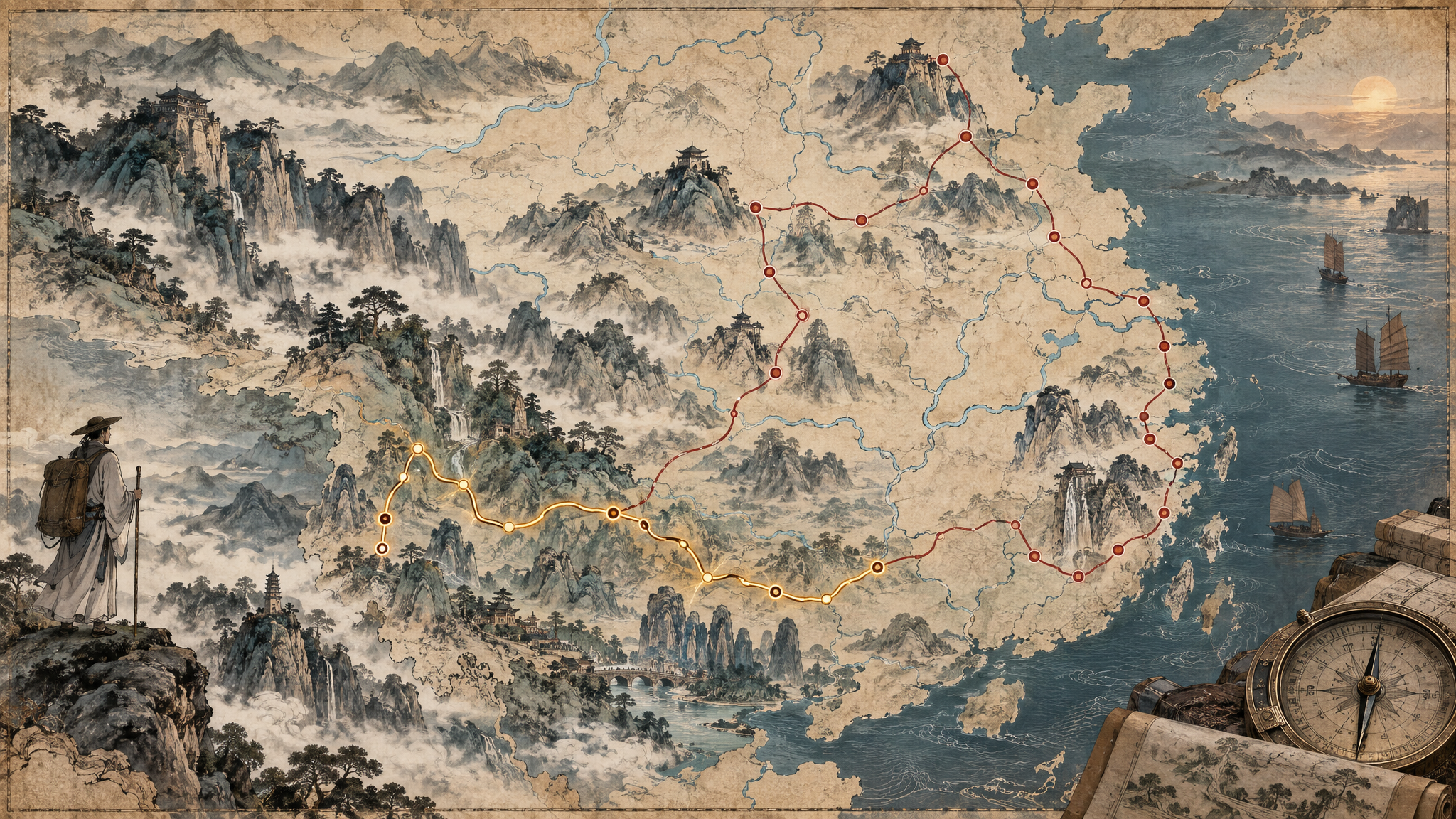
二十岁出头,他正式启程。先是东南的名山:天台山、雁荡山、黄山;然后越走越远,北上泰山、嵩山、华山、武当山、五台山、恒山。五十岁那年,他做了最后一次、也是最远的一次远征:从江阴出发,横穿浙江、江西、湖南、广西、贵州,一直走到云南丽江。这一次,他在路上走了四年。
How high is that mountain? Where does this river begin? What lies at the end of that cave?
按中国今天的行政区划,他的足迹遍及二十一个省、市、自治区。
In his early twenties he set out in earnest — first the famous mountains of the southeast: Tiantai, Yandang, and Huangshan (the "Yellow Mountain" that graces a million postcards today). Then farther and farther, to the sacred peaks of the north. At about fifty, he launched his final and greatest expedition: from his hometown of Jiangyin across six provinces, all the way to Lijiang in Yunnan, in China's far southwest. That single journey took four years.
这份行程单,放在今天足以让任何旅行博主羡慕。但别忘了他的"装备":没有官府资助,没有科考队,没有任何头衔,旅费大多自己筹措,靠一双脚,一根竹杖。路上他三次遇到强盗,四次断粮,同行的仆人半路逃跑。他全都扛了下来。
By modern borders, his footprints cover twenty-one of China's provinces and regions.
支撑他的不是什么宏大使命,而是一种近乎天真的执着:凡事要亲眼看到才算数。
Today this would make a spectacular travel blog. But consider his gear list: no government funding, no expedition team, no title, no sponsors. He paid his own way, on foot, with a bamboo staff. He was robbed three times. He ran out of food four times. A hired porter once fled mid-journey. He kept walking.
长江的源头在哪里?两千年来的权威经典《禹贡》说"岷山导江"——他不迷信,要走到上游去看。石灰岩溶洞是怎么形成的?书里语焉不详——他举着火把钻进上百个洞穴,一个一个地量。雁荡山顶到底有没有湖?古书说法矛盾——他攀上绝壁去验证,险些坠崖。
What drove him was not ambition but a stubborn, almost childlike insistence: only believe what you see with your own eyes.
他的日记远远超出了"游山玩水"——他用脚步丈量世界,用文字刻画真实。四百多年后,英国汉学家李约瑟感叹:读他的游记,不像在读一位十七世纪的学者,倒像在读一位二十世纪的野外勘测家。
Where does the Yangtze, China's greatest river, begin? For two thousand years the authoritative classics had declared the answer — and Xu Xiake didn't take the book's word for it. He walked upstream to look. (He was right; the classics were wrong. More on that in a later episode.) How do limestone caves form? The books were vague, so he took a torch and personally measured more than a hundred of them. Was there really a lake on the summit of Mount Yandang? The sources contradicted each other, so he climbed the cliff to check — and nearly fell to his death doing it.
This insistence on seeing for himself is why his diary reads as far more than scenery — he measured the world with his own feet, and captured the truth of it in words. Four centuries later, the British historian of science Joseph Needham marveled that it did not read like the work of a seventeenth-century scholar at all, but like the field report of a twentieth-century surveyor.
他走得快乐
He walked happily
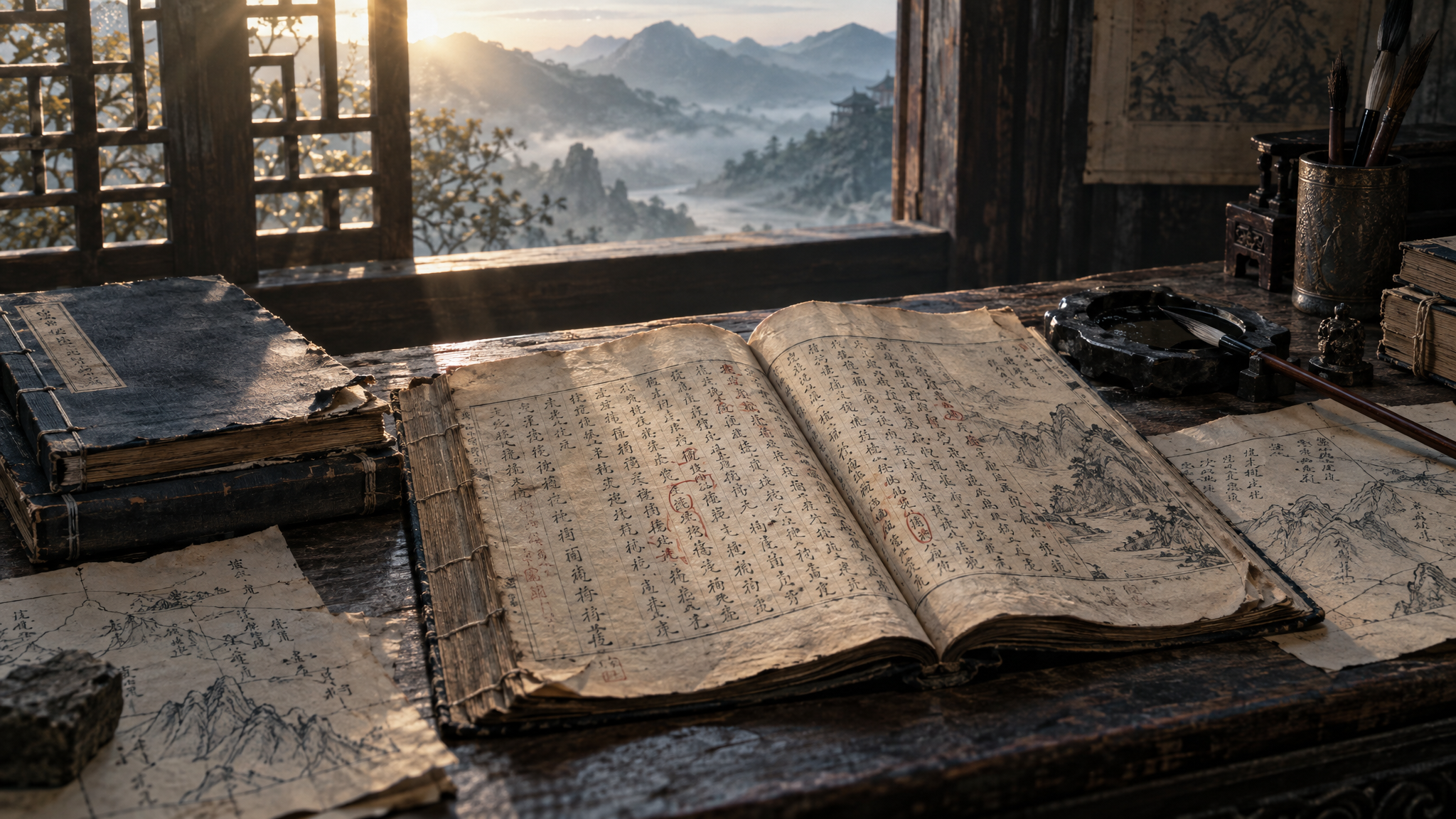
六十多万字的日记里,你能读到一个真正享受旅途的人。
And here is the part I love most: the 600,000 characters are not a record of suffering. They are the diary of a man having the time of his life.
他写黄山的大雾如何在一瞬间散开,露出万仞奇峰;他写溶洞里的钟乳,像幔帐,像莲花,像倒悬的笋;他写丽江土司府上的酥油茶,写除夕夜在异乡寺庙里听到的钟声。艰苦是真的,快乐也是真的。这两件事在他身上从不矛盾。
He writes about a sea of clouds on Huangshan parting in a single breath to reveal ten thousand peaks. He writes about stalactites like curtains, like lotus flowers, like upside-down bamboo shoots. He writes about buttered tea in a Naxi chieftain's mansion in Lijiang, and about hearing a temple bell ring in the new year in a town where he knew no one. The hardship was real. So was the joy. In him, the two never canceled each other out.
三百多年前,马可·波罗沿着丝绸之路来到中国——他有可汗的诏令和整个帝国的驿站系统。徐霞客什么也没有,只有母亲缝的一顶远游冠,和自己的两条腿。
More than three centuries before him, Marco Polo had traveled to China — with a Khan's passport and an empire's relay stations behind him. Xu Xiake had nothing but a travel cap his mother sewed for him, and his own two legs.
他临终前,据友人为他写的墓志铭记载,说过这样一段话:汉代的张骞、唐代的玄奘、元代的耶律楚材,都是奉了皇命才得以远行;而他一介布衣,凭自己的双脚走到了他们去过的地方,"死不恨矣"——死而无憾。
According to the epitaph written by his friend, he said on his deathbed: Zhang Qian of the Han, the monk Xuanzang of the Tang, Yelü Chucai of the Yuan — the great travelers of Chinese history all journeyed on imperial orders. "I, a commoner in plain clothes, reached the places they reached with nothing but a staff and a pair of worn sandals. I can die without regret."
为什么今天要读徐霞客
Why read Xu Xiake today
我们生活在一个"标准答案"比明朝更多的时代:标准的专业、标准的工作、标准的成功模板。四百年前那个年轻人提供的不是答案,而是一种提问的方式——
We live in an age with more "standard answers" than the Ming dynasty ever had: standard degrees, standard careers, standard templates for a successful life. What a young man offered four centuries ago is not an answer, but a way of asking —
如果人生只有一次,你敢不敢把它花在自己真正热爱的事情上?
If you only live once, do you dare spend it on what you truly love?
这个系列里,我会带你走一遍他走过的路:一位母亲如何用一顶远游冠送儿子出门;他如何背着朋友的骨灰走了一年;他如何比欧洲早两百年探索地下洞穴;又如何纠正了一个流传两千年的错误。
In this series, I'll walk you through the road he walked: how a mother sent her son into the world with a handmade hat; how he carried a friend's ashes for a year; how he explored underground caves two centuries before European science caught up; and how he corrected a mistake that had stood for two thousand years.
一切,要从那位母亲说起。
It all begins with that mother.
(Next: The Mother Who Told Her Son to Leave)