Previously
前情
Previously: the upheaval at the Murongs' of Suzhou — Duan Yu became emperor of Dali, Murong Fu went mad wearing a paper crown on an earthen grave, and of his four retainers one was dead and three had walked away. Of the three sworn brothers, only Xiao Feng was still unaccounted for.
上回说到姑苏慕容那一场变故:段誉做了大理的皇帝,慕容复戴一顶纸冠坐在土坟上疯了,四大家将一死三走。三个结义兄弟,只剩萧峰那一头还悬着。
From here the book writes of one thing only: how a man comes to a place where no road is left.
这部书从这里往后,只写一件事:一个人怎么走到无路可走。
Chapter 1: He Would Not Take the Command
第一回 不拜将
Yelü Hongji, Emperor of Liao, meant to make war on the Song.
辽国的皇帝耶律洪基,要打宋朝。
It was not a whim. Liao and Song had fought for decades, neither able to swallow the other, making peace one year and breaking it the next. This time Yelü Hongji had resolved to throw the whole kingdom south and be the man who united the realm.
这不是一时兴起。辽国和宋国打了几十年,谁也吃不掉谁,年年议和,年年翻脸。这一回耶律洪基下了决心,要倾国南征,做那个一统天下的人。
He wanted one man as his marshal: Xiao Feng, Southern Chancellery King.
他要一个人做元帅:南院大王萧峰。
Xiao Feng was a Khitan, held office in Liao, had put down a rebellion of the imperial clan and saved the emperor's life. For valour, no man in the Liao army matched him; for renown, his name rang louder in the Central Plains than in Liao. With such a man as marshal, the southern campaign was half won.
萧峰是契丹人,在辽国做官,平过宗室的叛乱,救过皇帝的命。论骁勇,辽国军中没人比得过他;论威望,他在中原武林的名头比在辽国还响。这样的人做大元帅,南征就成了一半。
Xiao Feng would not take it.
萧峰不接。
What he said was short: if Your Majesty means to strike at Song, I will not go; if I am to lead troops to kill the men of Song, I will not go.
他说的话很短:陛下要打宋国,我不去;要我带兵去杀宋人,我不去。
Yelü Hongji asked him why. He said: I was raised in Song, and the men of Song fed me and taught me; I am a Khitan, and the Khitan gave me birth. Whichever of the two I kill, I kill my own kin.
耶律洪基问他为什么。他说:我在宋国长大,宋人养我育我;我是契丹人,契丹生我。这两边的人,我杀哪一边,都是杀我自己的亲人。
In Jin Yong's hand the sentence is hard and short:
这话在金庸笔下写得很硬,只有一句:
"I beg Your Majesty, for the sake of the millions of lives in Song and Liao, to take back the imperial will to march south."
— Demi-Gods and Semi-Devils, revised edition 「请陛下为宋辽两国千万生灵着想,收回南征的圣意」
——《天龙八部》(修订版) To the emperor's ear that was a refusal. A refusal was disobedience. Disobedience was rebellion.
这话在皇帝听来,就是不肯。不肯就是不服。不服就是反。
Yelü Hongji did not break out at once. He drank with Xiao Feng and spoke a whole night of old friendship, and the next day he put it plainly: if you will not go, I cannot but suspect you.
耶律洪基没有当场发作。他请萧峰喝酒,说了一夜旧情,第二天把话说到了明处:你不肯去,我就不能不疑你。
Xiao Feng said the same thing again.
萧峰还是那句话。
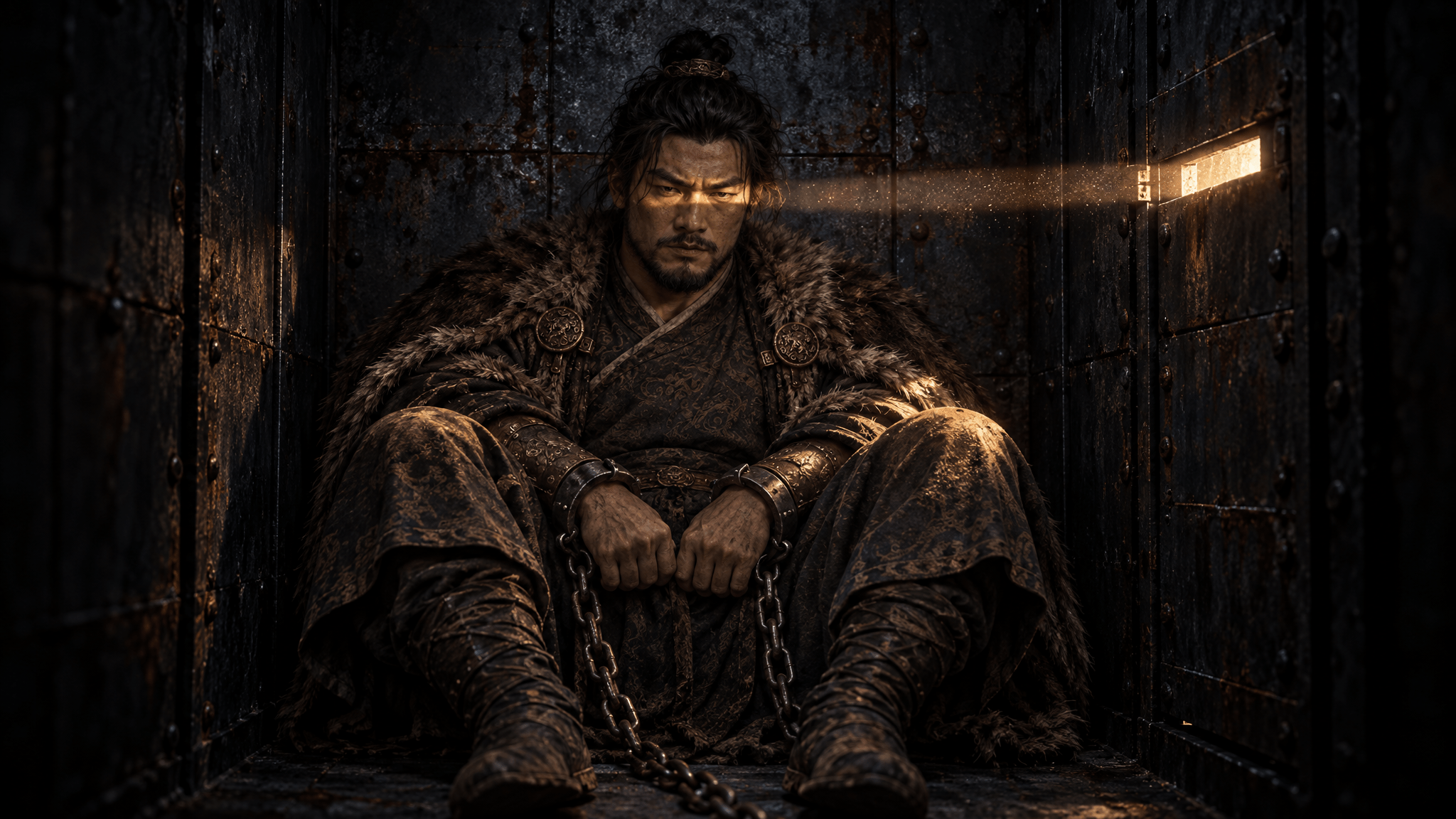
So the chains went on, and he was taken to an iron cell.
于是铁链上身,押进铁牢。
The place they held him was called Nanjing — what is Beijing today. The iron cell was built for prisoners who mattered: iron walls, iron door, and even the hatch for food no more than a crack.
关他的地方叫南京,就是今天的北京。铁牢是专为要犯造的:四壁是铁,门是铁,连送饭的口子都只开一条缝。
A man who could kill a tiger with one palm was held where he could not turn around without turning sideways.
一个能一掌打死猛虎的人,被关在一个连转身都要侧着身子的地方。
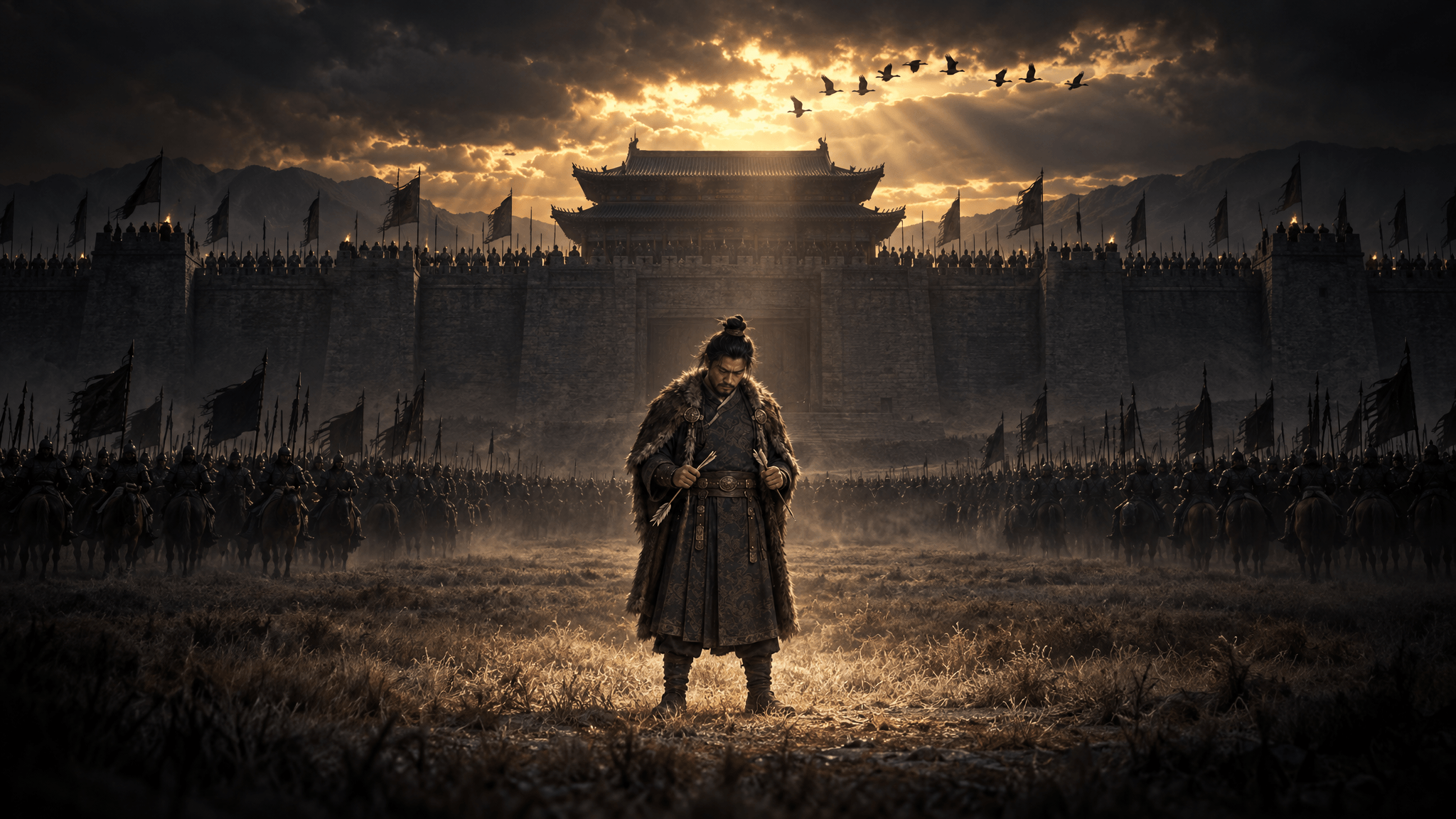
Chapter 2: The Rescue
第二回 劫囚
When word reached the Central Plains, the men there set out by two roads.
消息传到中原,中原的人分了两路动身。
One was the Beggars' Sect. Xiao Feng had been its Chief and had been cast out, but the old brothers of the Sect had never in their hearts counted him a stranger. Wu Changfeng gathered a band of the old beggars who had raised their hands years before in the Almond Grove, and they went north.
一路是丐帮。萧峰做过丐帮的帮主,后来被逐出,可丐帮里那些老兄弟,心里从来没把他当外人。吴长风带着一班当年在杏子林里举过手的老叫化,凑了人马往北。
The other was Dali and Vulture Palace. Duan Yu brought Dali's warriors, Xuzhu brought the nine divisions of Vulture Palace.
一路是大理和灵鹫宫。段誉带了大理的武士,虚竹带了灵鹫宫九天九部的人马。
These two could hardly have been less likely to meet: Dali in the southwest, Vulture Palace in the western regions, one heading north, one east, thousands of miles between.
这两路人马本来是凑不到一处的:大理在西南,灵鹫宫在西域,一个往北,一个往东,中间隔着几千里。
What brought them together was one sentence: my elder brother is in an iron cell.
让他们凑到一处的,是一句话:我大哥在铁牢里。
Duan Yu and Xuzhu had sworn brotherhood on Mount Shaoshi. On that day no one had thought anything of it. On this day both brought everything they had and went to a place neither had ever seen.
段誉和虚竹是在少室山拜的兄弟。那一天的结拜,当时没人当回事。到了这一天,两个人都带着自己全部的家当,往一个没去过的地方去。
The rescue is not told at length. The cell was held by picked Liao troops, and those who came were the finest hands of the Central Plains and the western regions. They fought a night, and the door opened.
劫囚这一场,写得不算长。守牢的是辽国的精兵,来的是中原和西域的顶尖好手。打了一夜,牢门开了。
When Xiao Feng came out he still wore the chains. Duan Yu moved to cut them; he said there was no need, and shook himself once, and the chains broke.
萧峰出来的时候,身上还带着铁链。段誉要替他砍,他说不必,自己一抖,链子断了。
The three stood a little while outside the cell. There was no weeping on shoulders, no speeches. Xuzhu said "Eldest Brother", and Duan Yu said "Eldest Brother".
三个人在牢外站了一小会儿。没有抱头痛哭,也没有说什么。虚竹叫了一声大哥,段誉叫了一声大哥。
Xiao Feng answered them.
萧峰应了一声。
Chapter 3: Yanmen Pass
第三回 雁门关
South they went, until they came to Yanmen Pass.
往南走,走到雁门关。
This pass was the border of Song and Liao. The wall was built along the mountain, a spine of stone running from end to end, dividing the land of the two kingdoms.
这座关,是宋和辽的界。关墙垒在山上,一道石头砌的脊梁,从这头到那头,把两国的地分开。
More than thirty years before, Xiao Feng's father had passed below this wall with his mother. Not far past it they met that ambush.
三十多年前,萧峰的爹带着他娘,就是从这道关下走过的。走过去没多远,就撞上了那一场伏击。
His mother died there, his father leapt from the cliff with her body. He was carried back to the Central Plains and raised, and became Chief of the Beggars' Sect, and was then exposed as a Khitan.
他的娘死在那里,他爹抱着尸身跳了崖。他被抱回中原,养大,做了丐帮的帮主,又被人揭出是契丹人。
Everything in his life had begun at this wall.
他这一辈子的事,都是从这道关开始的。
Yelü Hongji's host came up behind them. He was not chasing one fugitive; he meant to go south against Song, and had followed all the way to the pass, and caught Xiao Feng's band there in passing.
耶律洪基的大军追上来了。他不是来追一个逃犯,他是要南下打宋,一路追到关下,顺手把萧峰这一伙人也堵在这里。
The great banner of the imperial expedition stood on the grassland, and hundreds of thousands of men and horses were drawn up in ranks farther than the eye could reach.
亲征的大旗立在草原上,几十万人马列成阵,一眼望不到边。
Inside the pass stood Song's garrison; outside it, Liao's host; and between them, this small band around Xiao Feng.
关内是宋的守军,关外是辽的大军,中间夹着萧峰这一小群人。
Xiao Feng tried to enter the pass, and could not. The garrison commander sent word: you have come in the company of Liao troops — who knows if you are spies? Lay down your weapons and be searched, one by one. Already a thousand archers on the wall had arrows nocked and aimed at the ground below.
萧峰要进关,进不去。守将传下话来:你等与辽军同行而来,谁知道是不是奸细。放下兵器,一个个搜检。关上已有千余弓箭手张弓搭箭,对准了城下。
Ahead were Song arrows; behind, Liao horses. Xiao Feng had no road left.
往前走是宋人的箭,往后退是辽人的马。萧峰没有路了。
He did one thing: rode out through the pass alone, both hands raised above his head, and called Yelü Hongji out to speak with him. The call was filled with inner force, and a hundred thousand Liao soldiers heard every word.
他做了一件事:单骑出关,双手高举过顶,叫耶律洪基出来说话。这一声鼓足了内力,十余万辽军人人听得清清楚楚。
Yelü Hongji came out of his lines. Eight golden banners unfurled in the wind, ten generals in brocade and armour about him. From horseback his first words were aimed at the wall: Great King Xiao, you said you would bring the Liao army into the pass. Why is the gate not opened?
耶律洪基出阵。八面金黄大旗迎风展开,十员锦袍铁甲的大将簇拥着他。他骑在马上,第一句话是对着关上说的:萧大王,你说要引辽军入关,怎么开门还不大开?
One sentence nailed Xiao Feng as a traitor. He knew it was a trick to make the Song troops never dare open the gate, and a little sourness rose in him. He dismounted and asked pardon: Your Majesty, Xiao Feng has been false to your great kindness, and made you ride so far in person — a death crime, a death crime.
一句话,把萧峰钉成了叛徒。萧峰知道这是反间计,是要让宋军再也不敢放他入关,心里微微一酸,下马请罪:陛下,萧峰有负厚恩,重劳御驾亲临,死罪,死罪。
The words were not finished when two figures darted past like lightning and closed on Yelü Hongji: Xuzhu and Duan Yu.
话没说完,两个人影从旁掠过,如闪电一般向耶律洪基欺了过去。虚竹和段誉。
Three hundred shields stood up like a wall before the emperor. Duan Yu slipped through the one-foot gaps between the spearmen and axemen; Xuzhu seized the soldiers by chest and back and flung them out of the ranks.
三百面盾牌在皇帝面前立成一堵墙。段誉东一晃、西一斜,从长矛手刀斧手之间一尺宽的缝隙里游了进去。虚竹抓住辽兵的胸口背心,一个个掷出阵外。
Two generals came at him with lances. He leapt onto the lance-tips and, riding the spring of the shafts, dove at the emperor's head from midair.
两员大将双枪齐至,虚竹飞身踩上枪头,乘着枪杆一抖之势,从半空直扑皇帝头顶。
Xuzhu's left hand met the flat of the imperial sword and slid down it to seize the right wrist; Duan Yu came out of the crowd and took the left shoulder. With one shout they lifted the great-bodied emperor clean off his horse.
虚竹左手搭住耶律洪基砍来的宝刀刀背,翻手抓住他右腕;段誉从人丛中钻出,抓住了他左肩。两人一喝,把这个魁伟的皇帝从马背上提了下来。
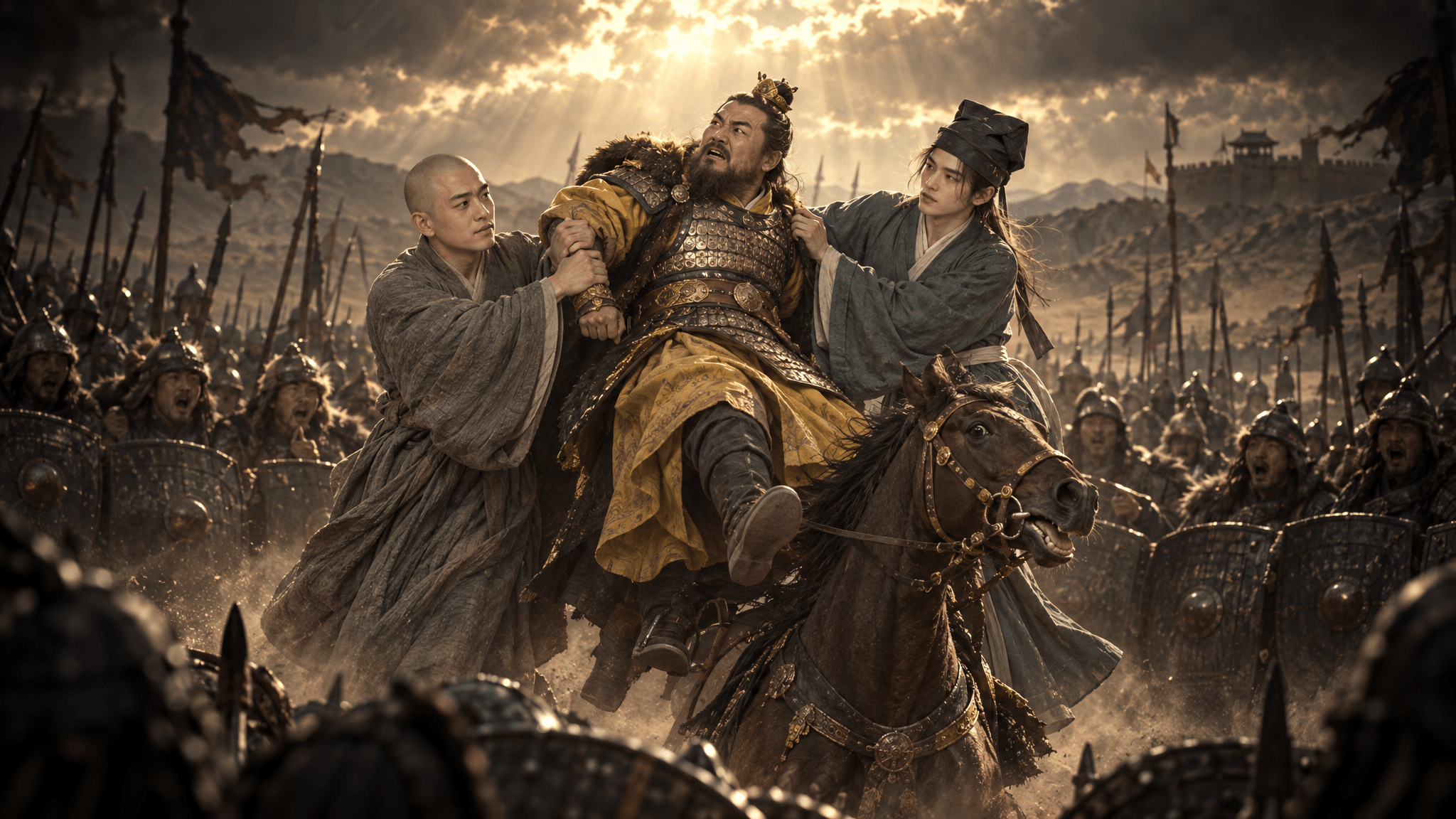
The Liao soldiers cried out in terror. Then Xiao Feng moved — not to save the emperor, not to stop his brothers. Both palms went out at once, one at each of his sworn brothers. They put up their palms to block, and in that instant Xiao Feng surged forward and took Yelü Hongji into his own hands.
四下辽兵惊得狂呼。这时候萧峰动了——不是救人,也不是拦人。他双掌骤发,向两个兄弟分袭过去。虚竹段誉举掌一挡,萧峰就势一冲,把耶律洪基拉到了自己手里。
Xiao Feng said to the emperor: Your Majesty is now the captive of my two brothers. By the Khitan custom, a captive must ransom himself with treasure.
萧峰对皇帝说:陛下已是我两个兄弟的俘虏。照咱们契丹人的规矩,俘虏须得以彩物自赎。
Yelü Hongji asked what he wanted. Xiao Feng said: I presume to speak for my two brothers. We ask only for one word from Your Majesty's golden mouth.
耶律洪基问要什么。萧峰说:微臣斗胆代两个兄弟开口,只是要陛下金口一诺。
That one word was a single sentence: draw the army back at once, and for the whole of Your Majesty's life, not one Liao soldier shall cross the border of Song and Liao.
一诺的内容只有一句:立即退兵,终陛下一生,不许辽军一兵一卒越过宋辽疆界。
Yelü Hongji's face darkened: you dare coerce me? And if I refuse?
耶律洪基的脸色阴了下来:你们胆敢胁迫于我?我若不允呢?
Xiao Feng said:
萧峰说:
"Then Your Majesty and I will die together, and the jade and the stone will burn as one. When we two swore brotherhood, there was a vow that we might die on the same day, the same month, the same year."
— Demi-Gods and Semi-Devils, revised edition 「那么臣便和陛下同归于尽,玉石俱焚。咱二人当年结义,也曾有过但愿同年同月同日死的誓言」
——《天龙八部》(修订版) The emperor started. He knew Xiao Feng too well: a man who feared nothing under heaven, and meant every word he said. He pondered, and suddenly laughed aloud, loud enough for the whole army to hear:
皇帝一凛。他太知道萧峰了:这人天不怕地不怕,说一是一。他沉吟片刻,忽然哈哈大笑,笑得全军都听得见:
"With this one life of mine, Yelü Hongji's, I buy peace for Song and Liao for decades. Good brother — you do set a high price on my life!"
— Demi-Gods and Semi-Devils, revised edition 「以我耶律洪基一命,换得宋辽两国数十年平安。好兄弟,你可把我的性命瞧得挺重哪!」
——《天龙八部》(修订版) He drew a feathered wolf-fang arrow from his quiver, bent it in both hands, and — crack — broke it in two and cast it to the ground: it is granted.
他从箭壶里抽出一枝雕翎狼牙箭,双手一弯,拍的一声,折成两段,投在地下:答允你了。
Breaking the arrow was the Khitan way of swearing. The arrow breaks, the word is fixed, and whoever goes back on it shall be as that arrow. The chapter title is this very act:
折箭,是契丹人立誓的规矩。箭断了,话就定了,谁反口,谁就如这支箭。这一章的回目,就是这一下:
"He made the Chanyu break his arrow; six armies shrank back; a hero's wrath blazed."
— Demi-Gods and Semi-Devils, new revised edition, chapter 50 title 「教单于折箭,六军辟易,奋英雄怒」
——《天龙八部》(新修版·第五十章回目) Yelü Hongji turned to go, but Xuzhu and Duan Yu did not make way. He understood at once: the three feared he would break his word, and wanted it spoken again before the whole army. He drew his treasure sword and raised it overhead: soldiers of the Great Liao, hear the command. A roll of drums, and the whole host fell silent.
耶律洪基转身要走,虚竹和段誉却不并让路。他登时会意——这三个人怕他食言,要他在三军面前把话再说一遍。当即拔出宝刀,高举过顶:大辽三军听令。一通鼓罢,全军肃静。
"The army turns north; the southern campaign is called off."
— Demi-Gods and Semi-Devils, revised edition 「大军北归,南征之举作罢。」
——《天龙八部》(修订版) He paused, and added one line more:
他顿了一顿,又补了一句:
"While I live, not one soldier of Great Liao shall set foot across the border of Great Song."
— Demi-Gods and Semi-Devils, revised edition 「于我一生之中,不许我大辽国一兵一卒,侵犯大宋边界。」
——《天龙八部》(修订版) The sword dropped, and the drums rolled again. This time the cheering that came out of the Liao ranks was louder than the drums.
宝刀一落,鼓声再起。这一回,从辽军阵中传出来的欢呼,比鼓还响。
The Liao soldiers were glad from the heart. The Khitan were brave, but war is a dice game, and no man was sure of coming home alive.
那些辽兵是真心欢喜。契丹人骁勇善战,可兵凶战危,谁也没有十分的把握活着回家。
The emperor himself had not expected this: he came to his horse, his legs gave way, his foot found the stirrup but he could not lift himself into the saddle, and two guards, hands under his back, boosted him up.
皇帝自己也没想到——他走到马前,两腿发软,踩着脚镫翻不上鞍去,两个侍卫扶住他后腰,用力一托,才把他托上了马。
Before he mounted, he looked back once at Xiao Feng, and said:
临上马前,他回头看了萧峰一眼,说了一句:
"Great King Xiao, you have done Song a service so great that high office and rich reward will be yours within days."
— Demi-Gods and Semi-Devils, revised edition 「萧大王,你为大宋立下如此大功,高官厚禄,指日可待。」
——《天龙八部》(修订版) It was mockery. It was also true: from that moment he had no home among the Khitan.
这话是挖苦。也是实话——从这一刻起,他在契丹就没有家了。
Chapter 4: Two Halves of an Arrow
第四回 两截断箭
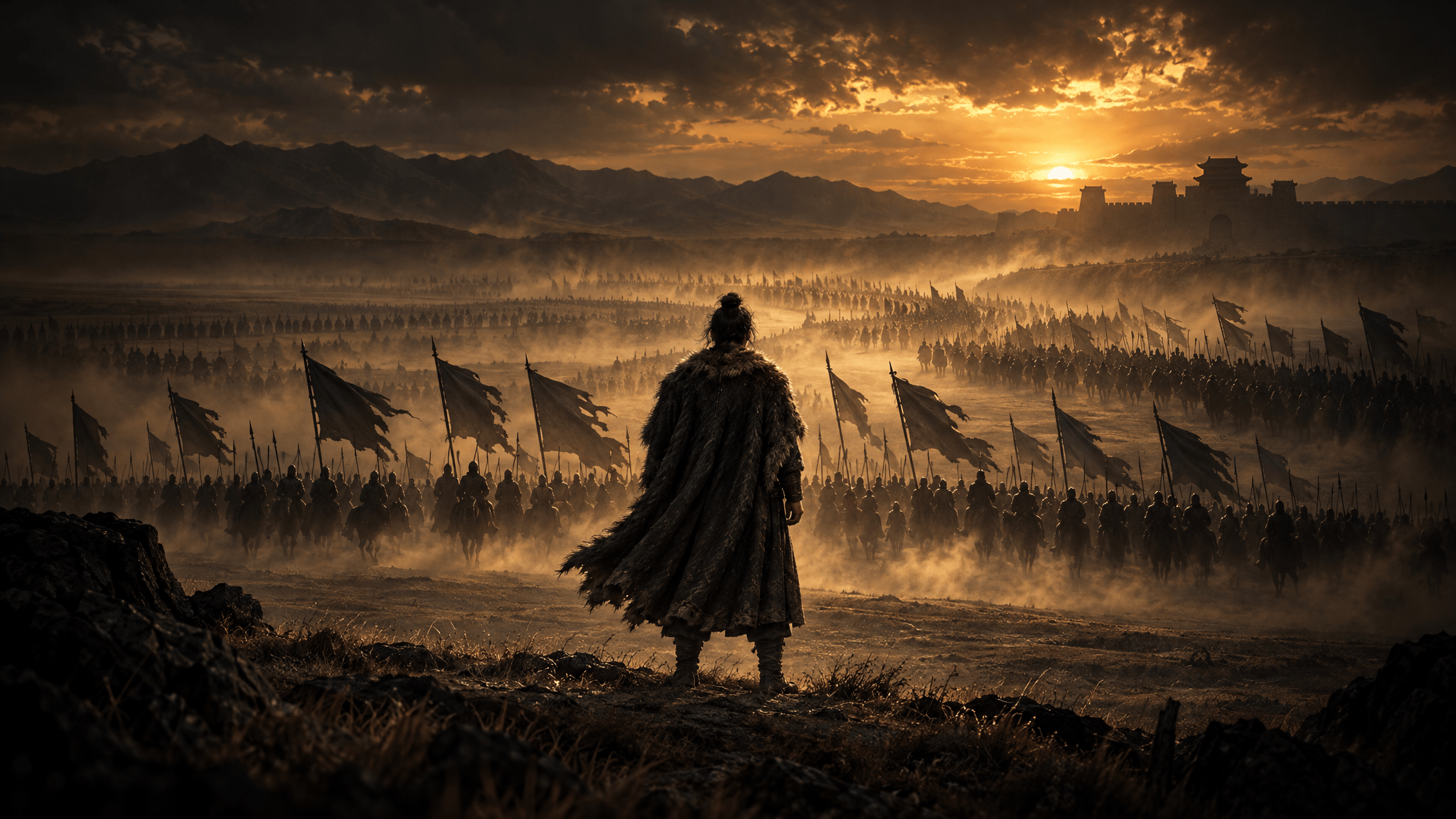
The host withdrew. The banners on the grassland came down one by one, and hundreds of thousands turned north, and the dust hung in the air half a day before it settled.
大军退了。草原上的旗一面一面倒下去,几十万人马掉头往北,尘土扬了半天才落。
Everyone below the pass breathed out.
关下的人都松了一口气。
Xiao Feng stood where he was and did not move.
萧峰站在原地,没有动。
Looking at Yelü Hongji's back, he spoke his last words aloud:
他望着耶律洪基的背影,把自己最后一段话说出了口:
"Your Majesty, Xiao Feng is a Khitan. Today I have coerced Your Majesty, and become a great criminal of the Khitan. What face have I left to stand between heaven and earth?"
— Demi-Gods and Semi-Devils, revised edition 「陛下,萧峰是契丹人,今日威迫陛下,成为契丹的大罪人,此后有何面目立于天地之间?」
——《天龙八部》(修订版) The words spoken, he picked up the two halves of the arrow from the ground, sent his inner force out, drew both arms back, and — thud — drove both halves into his own heart.
话一出口,他拾起地上那两截断箭,内功运处,双臂一回,噗的一声,两截箭一齐插进了自己的心口。
Yelü Hongji cried out in shock and spurred forward a few paces, then reined in again.
耶律洪基「啊」的一声惊叫,纵马抢前几步,又勒住了马。
Xuzhu and Duan Yu, frightened out of their wits, rushed to him — and saw the arrow-halves in the heart, the eyes shut, the breath gone.
虚竹和段誉吓得魂飞魄散,双双抢到跟前,却见两截断箭插正了心脏,萧峰双目紧闭,已然气绝。
Xuzhu tore open his robes to try to save him. The robes opened on the tattoo on his breast: a wolf's head in dark blue-green, jaws open, teeth bared, savage.
虚竹撕开他胸口的衣衫,还要施救。衣衫一开,露出胸口肌肤上那个刺青——青郁郁的狼头,张口露齿,神情狰狞。
That wolf's head, on the day in the Almond Grove when the letter named him a Khitan, had struck the whole grove dumb. Now it lay bare in the wind below Yanmen Pass, and there was no one left to fear it.
这个狼头,杏子林里揭出他是契丹人的那一天,曾经让满林的人无话可说。如今它露在雁门关外的风里,再没有一个人怕它了。
Xuzhu and Duan Yu wept aloud and bowed to the ground. The beggars of the Beggars' Sect crowded up and knelt about him in a ring. Wu Changfeng beat his breast and cried:
虚竹和段誉放声大哭,拜倒在地。丐帮的群丐一齐拥上来,团团拜伏。吴长风捶着胸,哭道:
"Chief Qiao — Khitan though you were, you were a hero ten thousand times over us good-for-nothing men of Han!"
— Demi-Gods and Semi-Devils, revised edition 「乔帮主,你虽是契丹人,却比我们这些不成器的汉人英雄万倍!」
——《天龙八部》(修订版) The heroes of the Central Plains closed in one by one, talking low. Some said: was Chief Qiao truly a Khitan? Then why did he fight for Song? It seems there are heroes among the Khitan too.
中原群豪一个个围拢,低声议论。有的说:乔帮主果真是契丹人吗?那他为什么反而来帮大宋?看来契丹人中也有英雄豪杰。
Others said: he grew up among us men of Han, and learned the Han's great benevolence and righteousness.
有的说:他自幼在咱们汉人中间长大,学到了汉人的大仁大义。
Others again said: he served Song, but among the Liao he became a traitor who sold his country and helped the enemy — this was suicide to flee punishment. At once someone shot back: what fleeing? A great hero like Chief Qiao — is there anything left in the world for him to fear?
也有的说:他虽于大宋有功,在辽国却成了叛国助敌的卖国贼,他这是畏罪自杀。立刻有人反驳:什么畏不畏的,乔帮主这样的大英雄,天下还有什么事要他畏惧?
Yelü Hongji looked on from afar, and his mind went blank: in the end, had this man served Liao or harmed it? When he begged me not to strike Song, was it for the men of Song or for the Khitan?
耶律洪基远远看着,心里一片茫然:他到底于我大辽是有功还是有过?他苦苦劝我不可伐宋,到底是为了宋人,还是为了契丹?
He swore brotherhood with me and was loyal to me to the last. Today, dying below Yanmen Pass, it certainly was not for Song's titles or gold. Then — then for what?
他和我结义为兄弟,始终对我忠心耿耿,今日自尽于雁门关前,自然决不是贪图南朝的功名富贵——那,那却又为了什么?
He shook his head, smiled a bitter little smile, turned his horse, and passed back through the Liao ranks.
他摇了摇头,微微苦笑,拉转马头,从辽军阵中穿了过去。
The Liao army rode north, thousand upon thousand. The soldiers kept turning in the saddle to look back at Xiao Feng's body on the ground. Then a crying came from the sky — wah, wah — and a line of wild geese passed over the host's heads and flew through Yanmen Pass.
辽军千乘万骑向北而行。众将士不住回头,望向地下萧峰的尸体。只听得鸣声哇哇,一群鸿雁越过众军的头顶,从雁门关飞了过去。
Much has been written about that moment since. Some say he died for his country, some that he died for love, some that he was driven to it. None of it is quite right.
这段的地方,后来人写过很多。有的说是殉国,有的说是殉情,有的说他是被逼死的。都不全对。
The Khitan saw a traitor: he had forced his own emperor to break an arrow and had blocked his own kingdom. The men of Song saw a Khitan: he had grown up in Song these thirty years, but the blood was Khitan blood, and who knew when he might turn.
契丹人看他是叛徒:他逼自己的皇帝折箭,挡了自己的国。宋人看他是契丹人:他这三十年在宋国长大,可血是契丹的血,谁知道他哪天翻脸。
He saw it so himself. Those words were not a moment's despair; he had worked it out long since: to force one's own emperor to break an arrow is, among the Khitan, the first of crimes. And for that crime only one life would pay.
他自己也这么看。上面那句话不是一时灰心。他早想明白了:逼自己的皇帝折箭,在契丹,这是第一大罪。这个罪,只有一条命能抵。
Neither side could hold him. He stood on the ground between, and on that ground there was no place for him.
两边都容不下他。他站在中间那块地上,那块地上没有他的位置。
His death was not a defeat by anyone. He made both sides whole: the Khitan promised not to cross the border, and Song was spared another great war, and the account was paid with one life.
他这一死,不是输给了谁。他是把两边都成全了:契丹答应不越界,宋这边也不至于再添一场大战,这一笔账,用他一条命抵了。
What one man could do for two kingdoms, he had done. And when it was done, there was nowhere for him to stand.
一个人能替两国做的事,他做到了。做完之后,他自己没有地方站。
There was only one person in his life he ever gave way to. After A'zhu died, he settled one thing about himself for good:
他这一生只对一个人服过软。阿朱死后,他把一句话说定了:
"I killed A'zhu by my own hand — in this life I will never marry again. A'zhu is A'zhu and no other."
— Demi-Gods and Semi-Devils, revised edition 「我既误杀阿朱,此生终不再娶,阿朱就是阿朱」
——《天龙八部》(修订版) "Never again in this life" — six words that sealed off all the years left to him.
"此生终不再娶"六个字,等于替自己把后面的日子封了。
A man who has said a thing that final, standing below Yanmen Pass with the Khitan calling him a traitor and the men of Song calling him a Khitan barbarian, neither side willing to have him — where else was there left for him to go?
一个把话说得这么绝的人,站在雁门关下,契丹那边他是个叛徒,宋这边他是个契丹胡虏,两边都不要他,他还能往哪里去。
Chapter 5: Two Went Over
第五回 两个人跳下去
First it must be made clear how A'zi and You Tanzhi came to Yanmen Pass.
先得说清阿紫和游坦之是怎么到雁门关的。
A'zi had come from Liao behind Xiao Feng. When Xiao Feng was taken into the iron cell, she followed him from Nanjing all the way to Yanmen Pass, not daring to show herself on the road. She knew her brother-in-law was a dead man this time. She followed him even so.
阿紫是跟着萧峰从辽国来的。萧峰被押进铁牢,她从南京一路跟到雁门关,路上没敢露面——她知道姊夫这回是要死的人了,可她还是要跟。
You Tanzhi had come behind A'zi. He had fought Xiao Feng on Mount Shaoshi, and afterwards lost his sight, and at the last become a man of the Beggars' Sect. Where A'zi went, he went — so it had been all his life.
游坦之是跟着阿紫来的。他在少室山上跟萧峰打了一场,眼睛瞎了,最后成了丐帮的人。阿紫走到哪里,他就跟到哪里,一辈子都是这样。
A'zi pushed through the crowd and threw herself down beside Xiao Feng.
阿紫推开众人,扑到萧峰身边。
She looked at him a long time without moving, then took his upper body into her arms and said softly: brother-in-law, these are all bad people; pay them no mind. Only A'zi truly treats you well.
她怔怔地瞧了半晌,把萧峰的上半身抱在怀里,柔声说:姊夫,这些都是坏人,你别理睬他们,只有阿紫,才真正地待你好。
Xiao Feng was a big man, and his feet still trailed on the ground. She held him and spoke as one soothing a child:
萧峰身子长大,两脚还垂在地上。她抱着他,像哄孩子一样:
"Brother-in-law — now at last you are good. I hold you, and you do not push me away. Yes — it should be like this."
— Demi-Gods and Semi-Devils, revised edition 「姊夫,你现下才真的乖了,我抱着你,你也不推开我。是啊,要这样才好。」
——《天龙八部》(修订版) Xuzhu and Duan Yu exchanged a look, and both understood: in the excess of her grief, her mind had begun to slip.
虚竹和段誉对望一眼,心里都明白:她伤心过度,神智已经有些失常了。
This woman had never been good to anyone in her life. Her father was Duan Zhengchun, her mother Ruan Xingzhu, and she had been given away at birth and raised in the Xingxiu Sect, where she learned poisoning, and torment, and taking pleasure in other people's pain.
这个女人一辈子没对谁好过。她爹是段正淳,娘是阮星竹,生下来就被送了人,在星宿派长大,学的是下毒、是折磨人、是拿别人的痛苦取乐。
She had caught You Tanzhi and fitted an iron mask on him and kept him as a plaything for years.
她捉了游坦之,给他套上铁罩,当玩物耍了很多年。
She had given her heart to exactly one person. That person now lay dead in her arms.
她只对一个人动过真心。这个人现在死在她怀里。
Then she did a thing that stopped everyone: she put her hands to her own eyes and dug them out.
她做了一件事,让所有人都愣住:她伸手把自己的眼珠挖了出来。
Those eyes were not hers. They had been You Tanzhi's.
这两只眼睛不是她的。是游坦之的。
Ding Chunqiu's poison had blinded her, and You Tanzhi had dug out his own eyes and given them to her. She had not known it then, and had never thanked him after she learned. Now she meant to give them back.
先前她被丁春秋的毒瞎了双眼,游坦之把自己的眼睛挖出来给了她。她那时候不知道,知道之后也没有谢过。这会儿她要把眼睛还回去。
That done, she took Xiao Feng in her arms and walked to the edge of the cliff.
还完了,她抱起萧峰,往崖边走。
It was the cliff below Yanmen Pass. More than thirty years before, another Khitan had leapt from that same cliff with his wife's body in his arms.
那是雁门关外的悬崖。三十多年前,另一个契丹人抱着妻子的尸身,从这片崖上跳下去过。
She jumped.
她跳了。
You Tanzhi jumped after her.
游坦之跟着跳了。
This man had lived the least like a man of anyone in the book: an iron mask over his head, poison in his flesh, used like a dog, and at the end without even eyes. All his life he had wanted A'zi to look at him once. He never got it. And still he jumped.
这个人在书里活得最不像人:铁罩子罩着头,一身毒,被人当狗一样使唤,最后连眼睛都没有了。他一辈子只想要阿紫看他一眼。他到死也没有等到。可他还是跳了。
Chapter 6: Each to His Own Place
第六回 各归各处
The business below Yanmen Pass ends here.
雁门关下的事,到这里就完了。
Duan Yu went back to Dali. He was no longer the young lord who had run away from home.
段誉回了大理。他走的时候,已经不是当初那个从家里逃出来的公子哥了。
He had fallen from a cliff at Mount Wuliang, been shut up in the Valley of Ten Thousand Calamities, followed a girl through the south for years, fought a battle at Mount Shaoshi, and answered three questions in Xixia.
他在无量山掉过崖,在万劫谷里被关过,在江南跟过一个姑娘许多年,在少室山跟人打过一场,在西夏答过三道题。
Duan Yu did not want it at first. He had never in his life thought of being emperor; being emperor meant holding court, reading memorials, reasoning with a roomful of old men — none of which he knew how to do.
段誉一开始不想接。他一辈子没想过做皇帝,做皇帝要上朝、要看奏章、要跟一屋子老头儿讲道理,这些他一样都不会。
But the seat came round to him all the same. His uncle Duan Zhengming — the Baoding Emperor — had taken vows at Tianlong Temple years before, and the throne had passed to his father, Duan Zhengchun.
可这个位子绕了一圈,落到他头上。他伯父段正明,就是那位保定帝,早年在天龙寺剃度做了和尚,皇位传给了他父亲段正淳。
And Duan Zhengchun too was dead, killed in the upheaval at Manduo Manor. Of the Duan line of his generation, only he was left.
段正淳后来也死了,死在曼陀山庄那一场变故里。段家这一辈,只剩他一个。
His family's secret was only now fully opened. He was not Duan Zhengchun's son. He was the son of Duan Yanqing — the man stripped of the rank of crown prince, his legs crippled, known through the jianghu as All Evils Fulfilled.
他这一家的身世,到这时候才彻底摊开。他不是段正淳的儿子。他是段延庆的儿子——那个被削去太子之位、断了双腿、在江湖上号称"恶贯满盈"的人。
All his life Duan Yanqing had sought to take the throne back, and killed his way toward it, and in the end found the throne had been his own son's all along. He said nothing, and went away.
段延庆一生要夺回皇位,杀了一路的人,最后发现皇位本来就是自己儿子的。他什么也没说,走了。
Duan Yu learned it and said nothing either. He became emperor and reigned for decades, and his is the best ending in the book. But he knew in his own heart: everything he had gained had been given him by others, and everything wrong in his life had been made by others.
段誉知道了这件事,也没有说什么。他做了皇帝,做了几十年,是这部书里结局最好的一个。可他自己心里明白:他这一辈子,得的东西全是别人给的,错的东西全是别人造的。
Xuzhu went back to Piaomiao Peak. Master of Vulture Palace, consort of Xixia. The palace was a seat he had not wanted; the consortship was the one thing he had chosen for himself.
虚竹回了缥缈峰。灵鹫宫的主人,西夏的驸马。宫主的位子是他不想要的,驸马这一样,是他自己愿意的。
Afterwards he released, one by one, every cave master and island chief whom the Life-Death Talisman had held. The thing had been made to bind men; in his hands it became a way of letting them go.
他后来把灵鹫宫那些被生死符制住的洞主岛主,一个一个都放了。这门东西本来是拿来治人的,到他手里,成了放人的。
The book follows three protagonists and three roads.
这部书写了三个主角,三条路。
All his life Duan Yu did not want to learn martial art, and in the end had matchless skill; did not want to be emperor, and became emperor; chased one girl half his life. Whatever he wanted would not come; whatever he did not want came looking for him.
段誉一辈子不想学武,最后得了一身绝世的功夫;不想做皇帝,最后做了皇帝;一心追一个姑娘,追了半辈子。他要什么,什么就不来;他不要什么,什么就自己找上门。
All his life Xuzhu wanted only to sweep and recite in Shaolin, and in the end was cast out of Shaolin and made master of Vulture Palace; all his life he kept the vows, and broke them one after another — meat, women, killing. Not one thing he had did he earn; only one thing did he want.
虚竹一辈子只想在少林寺扫地念经,最后被逐出少林,做了灵鹫宫的主人;一辈子守戒,荤戒、色戒、杀戒,一戒一戒全破了。他没有一样是自己挣的,只有一样是自己想要的。
All his life Xiao Feng wanted to be a good man: a good hero to the men of Song, a good subject to the Khitan, a man who did right by his brothers, his friends, and the world. He did every part of it, and at the end neither side would have him.
萧峰一辈子要做一个好人,做宋人的好汉,做契丹人的好臣子,做一个对得起兄弟、对得起朋友、对得起天下的人。他每一样都做到了,做到最后,两边都不要他。
In these three men the same thing is at work: in a human life, what a man wants, what he gets, and what he deserves are often three different things.
三个人的路,说到底是一件事:人这一生,想要的、得到的、该得的,常常是三样东西。
Jin Yong disposes of all three in four words: a prince in his downfall.
这三个人,金庸只用四个字就交代完了:王孙落魄。
"A prince in his downfall — how shall he bear the willow branch and the dew of jade?"
— Demi-Gods and Semi-Devils, revised edition, prefatory lyric 「王孙落魄,怎生消得,杨枝玉露」
——《天龙八部》(修订版·书前词) All three were "princes": Duan Yu a prince of Dali, Xiao Feng Southern Chancellery King of Liao, Xuzhu master of Vulture Palace and consort of Xixia. In rank each stood above the last.
这三个人都是"王孙":段誉是大理的王子,萧峰是辽国的南院大王,虚竹做了灵鹫宫主、西夏驸马。名分上一个比一个高。
And each came down: Duan Yu fell from a cliff at Mount Wuliang, Xiao Feng was ringed in at the Manor of Gathering Worthies, Xuzhu was pushed along by other people's hands from first to last.
可三个人都落魄过:段誉在无量山掉过崖,萧峰在聚贤庄被围过,虚竹从头到尾都在被人推着走。
The willow branch and the jade dew are what Guanyin holds, to save the suffering — and that one drop never came to any of them.
杨枝玉露是观音手里那枝杨柳、那滴甘露,专救苦厄;这一滴,他们谁也没等到。
The bitterest in the book is not the one who died but the two who lived. One became emperor, one became a palace master, and both had more than a lifetime could use.
书里最苦的,不是死掉的那个,是活着的那两个。他们一个做了皇帝,一个做了宫主,都有了一辈子用不完的东西。
And when they stood below Yanmen Pass and watched their elder brother drive the arrow into his breast, there was nothing either of them could do.
可他们站在雁门关下看着大哥把箭插进胸口的时候,什么都做不了。
Duan Yu knew the Six Meridians Sword; Xuzhu carried seventy years of power. At that moment neither was of the slightest use.
段誉会六脉神剑,虚竹有一身七十年的功力。这两个人在那一刻,一点用都没有。
That is what the book has to say. However high the martial art, it is not higher than what sits in a man's heart.
这就是这部书要说的。武功再高,也高不过人心里那点东西。
Another line in that prefatory lyric says the whole of it:
书前那首词里另有一句,把这一层意思说尽了:
"One laugh shared — and in the end all things are empty."
— Demi-Gods and Semi-Devils, revised edition, prefatory lyric 「同一笑,到头万事俱空」
——《天龙八部》(修订版·书前词) "One laugh shared": those still living must go on laughing together. "All things are empty": the laugh over, nothing is held.
「同一笑」,是活着的人还要一起笑;「万事俱空」,是笑完了,什么都留不住。
Xiao Feng died below the pass; Duan Yu reigned for decades; Xuzhu set the men of Vulture Palace free one by one; Murong Fu sat on an earthen grave in a paper crown, taking the bows of children.
萧峰死在关下,段誉做了几十年皇帝,虚竹把灵鹫宫的人一个个放了,慕容复戴一顶纸冠坐在土坟上受孩子的拜。
These take hundreds of thousands of words in the book, and in the end it comes to one sentence like this.
这些事在书里占了几十万字,到头来,就是这样一句话。
There is another line in that prefatory lyric, about a man far along a road:
书前那首词里还有一句,写的是一个人走了很远的路:
"A green skirt and a face of jade, as though we had known each other; in the ninth month the camellias bloom all along the road."
— Demi-Gods and Semi-Devils, revised edition 「青裙玉面如相识,九月茶花满路开」
——《天龙八部》(修订版) Xiao Feng came to Yanmen Pass, and many along that road knew him: the old brothers of the Beggars' Sect, Duan Yu of Dali, Xuzhu of Vulture Palace, Yelü Hongji of Liao.
萧峰走到雁门关,路上认得他的人不少:丐帮的老兄弟、大理的段誉、灵鹫宫的虚竹、辽国的耶律洪基。
That many knew him, and in the end he stood below the pass alone. The camellias bloomed the whole length of the road, and they did not bloom for him.
认得的人这样多,最后他还是一个人站在关下。茶花开得满路,不是给他开的。
At the front of the book Jin Yong set a lyric, and these lines are in it:
金庸在书前放了一首词,词里有这么几句:
"Glory and splendour, a worn-out shoe; life and death, drifting cloud; what has this body left to fear?"
— Demi-Gods and Semi-Devils, revised edition, prefatory lyric 「敝屣荣华,浮云生死,此身何惧」
——《天龙八部》(修订版·书前词) And so Demi-Gods and Semi-Devils is told to its end.
天龙八部,到此讲完。
Devas, nagas, yakshas, gandharvas, asuras, garudas, kinnaras, mahoragas — these eight kinds of "non-human" in the Buddhist scriptures, each with its own power and each with its own burden, and not one of them escapes what it is.
天、龙、夜叉、乾达婆、阿修罗、迦楼罗、紧那罗、摩呼罗迦——佛经里这八种"非人",各有神通,各有业障,谁都逃不出自己那一样。
The people in this book likewise: each with a power, each with a burden. Xiao Feng's power was his ability, his burden his blood; Duan Yu's power was his heart, and his burden was that same heart; Xuzhu had nothing at all, and so everything fell on him.
书里的这些人,也是各有神通,各有业障。萧峰的神通是他的本事,他的业障是他的血;段誉的神通是他的心,他的业障也是他的心;虚竹什么都没有,所以什么都落到了他身上。
Having read it, you may think of a sentence: no one is without grievance, and all who love are bound by it.
读完了,你也许会想起一句话:无人不冤,有情皆孽。
Those eight words are not from the novel. A scholar named Chen Shixiang wrote them to Jin Yong after reading it, and Jin Yong had them printed at the front of the book.
这八个字不是书里的话。是一个叫陈世骧的学者读了这部书之后写给金庸的,金庸把它印在了书前。
Thirteen chapters told, and the book ends here.
十三个故事讲完,这一部书也就到这里。
Two more pieces follow: one on what those "eight legions" in the title actually are, and one that lays the three storylines out on a single sheet, so you can see how the book is put together.
后面还有两篇:一篇说书名里那"八部"到底是什么,一篇把三条线摊在一张纸上,让你看清这部书是怎么搭起来的。