Previously
前情
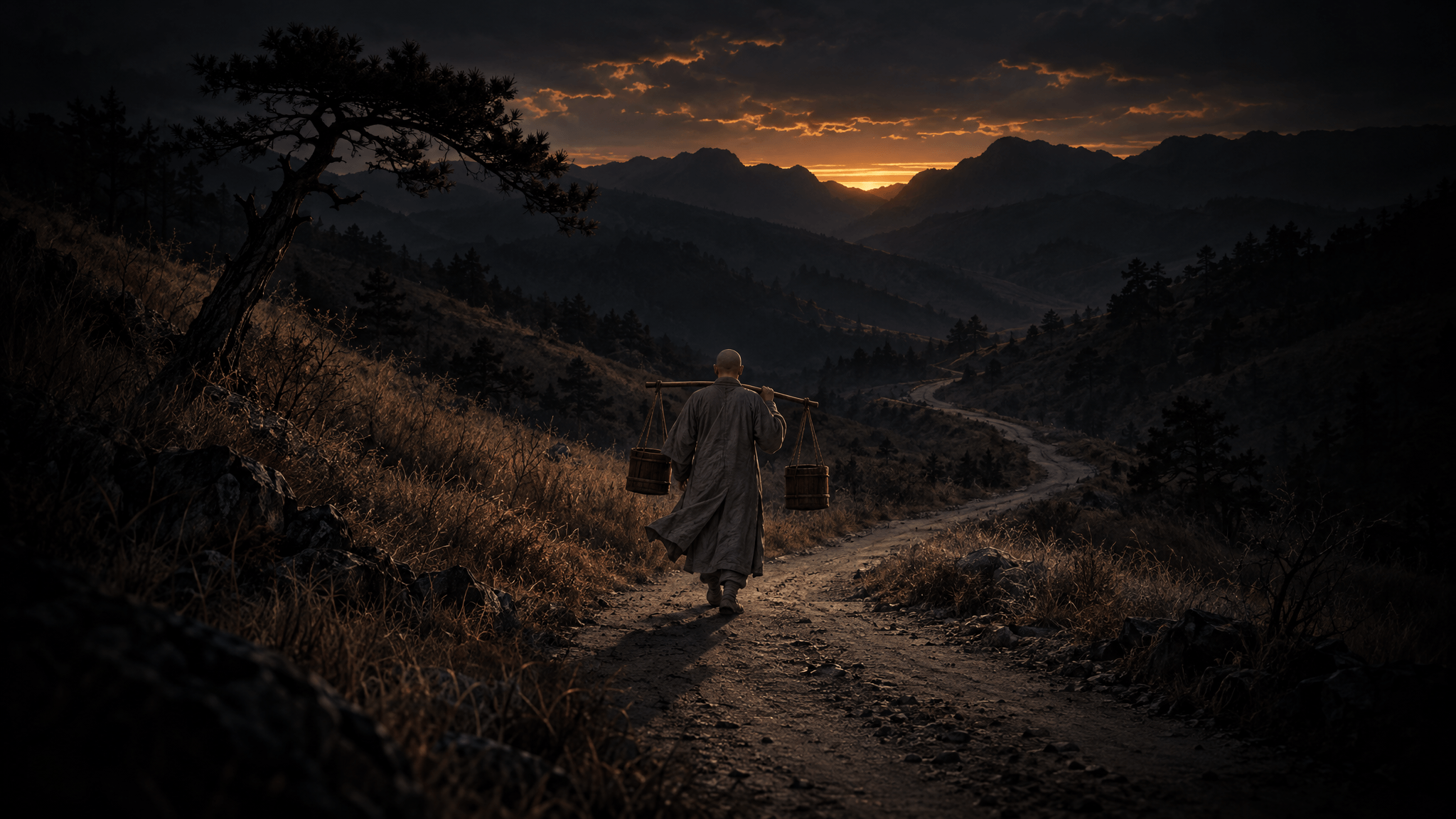
Previously: at the end of the last chapter, word came from Liao that the Shaolin Sect was about to hold a Heroes' Assembly, and the heroes of the realm would gather at Mount Shaoshi. That great matter we set aside for now — for as the tale branches like a flowering tree, we speak first of one branch at a time. This chapter begins with a little monk of Shaolin Temple. All his life this little monk went unnoticed, and no one imagined that his story would begin with a game of chess.
话说上回结尾,辽国那边传来消息:少林派要开英雄大会,天下群豪都要往少室山上去。这桩大事且按下不表——花开两朵,各表一枝。这一回,先讲少林寺里的一个小和尚。这个小和尚一辈子默默无闻,谁也没想到,他的故事是从一盘棋开始的。
Chapter 1: A Little Monk of the Temple — Down the Mountain
第一回 寺中小僧,随队下山
So, in Shaolin Temple there was a little monk whose dharma name was Xuzhu. Xu means "empty," and zhu means "bamboo" — and the name fit him rather well: raised in the temple, he was an empty, unremarkable sort of person, like a bamboo stalk standing in the corner that no one gives a second glance. He was not old —
且说少林寺里有个小和尚,法名叫虚竹。"虚"是虚空的虚,"竹"是竹子的竹——这名字安在他身上,倒有几分贴切:他在寺里长大,空空洞洞的一个人,就像根不起眼的竹子,戳在墙角,谁经过也不会多看一眼。他年纪不大——
"Xuzhu is twenty-four years old this year."
— Demi-Gods and Semi-Devils, serialized edition 「虚竹今年二十四岁」
——《天龙八部》(连载版) Twenty-four years in the temple — striking the bell, sweeping the floors, chanting sutras; he had learned a little martial art too, but ordinary, nothing to show. Such a little monk should have passed his whole life in peace within the temple walls. But this once, Shaolin Temple received an invitation card. The sender was known in the jianghu as the Deaf-Mute Elder — truly deaf and truly mute, and yet a most formidable figure. He invited none other than the monks of Shaolin who could play chess, and the card said plainly that the place was Mount Leigu in Henan, at a spot called the Valley of the Deaf and Mute:
二十四年都在寺里,敲钟、扫地、念经,武功也学过几手,只是平平常常,上不得台面。这样一个小和尚,本该在寺里平平安安过一辈子。偏偏这一回,少林寺收到了一张请柬。请柬,就是邀客的帖子。下帖的人,江湖上人称"聋哑老人"——此人当真又聋又哑,却是个极厉害的角色;他邀的不是别人,正是少林寺中会下棋的高僧,帖子写得明白,地点在河南的擂鼓山,一处叫天聋地哑谷的地方:
"Come to the Valley of the Deaf and Mute at Mount Leigu for a meeting."
— Demi-Gods and Semi-Devils, new revised edition 「擂鼓山天聋地哑谷一叙。」
——《天龙八部》(新修版) That one card stirred the whole temple. The masters conferred, and led by Master Xuannan, a senior monk of Shaolin, a company of chess-playing monks set out for Mount Leigu as invited; and among the attendants and junior monks who followed was Xuzhu. Here the thing must be said plainly: Xuzhu did not know how to play chess — of life and death on the board he knew nothing at all. He went down the mountain merely as a follower — to carry water, do odd jobs, and run errands. How could he have guessed that once he left the temple on this errand, the road back would never be the same?
一张帖子,就把少林寺惊动了。寺里的大师一商议,由少林寺的高僧玄难大师领头,带了一众会棋的僧人,依约赶赴擂鼓山;随行的杂役、小僧里,就有一个虚竹。这里得先把话说清:虚竹本不会下棋,棋盘上的死活他一窍不通。他随队下山,不过是个跟班——挑水、打杂、听差遣。他那会儿哪里想得到,这一趟出寺,再回头的路就全变了。
Chapter 2: The Chess Gathering at Mount Leigu — the Masters Play
第二回 擂鼓山棋会,高手过招
So the company reached the Valley of the Deaf and Mute at Mount Leigu, and found many people already gathered there. The Deaf-Mute Elder, whose real name was Su Xinghe, had set out a game of chess and invited the heroes of the realm to solve it. This game had a name: the zhenlong — the word meaning a chess puzzle of the deepest difficulty, its stones laid with cunning, trap within trap, so that an ordinary man, glancing at it, cannot even see where to begin.
却说众人到了擂鼓山天聋地哑谷,只见谷中早已来了许多人。聋哑老人本名苏星河,他摆下一盘棋,请天下英雄来解。这盘棋有个名目,叫"珍珑"——珍珑二字,说的就是极难解的棋局:布子玄妙,一环套一环,寻常人瞧上一眼,连从何入手都摸不着。
The wonder of the zhenlong lay in one thing: it was alive.
这珍珑奇就奇在一个地方:它是活的。
"This puzzle changes in a hundred ways, and plays itself to suit each man."
— Demi-Gods and Semi-Devils, revised edition 「这个珍珑变幻百端,因人而施」
——《天龙八部》(修订版) What kind of man sat down before it, it showed what kind of sickness was in his heart. In the valley hung a scroll, and written on it were these words —
什么样的性子,下到盘前,它就照出什么样的心病。谷里挂着一幅字,写的正是——
"Win or lose, rise or fall — how can any man count it out!"
— Demi-Gods and Semi-Devils, revised edition 「输赢成败,又争由人算!」
——《天龙八部》(修订版) In those days the famous masters of the realm came one after another. Duan Yu, Prince of Dali, arrived; Murong Fu of the Gusu Murong family arrived; even Duan Yanqing, first of the Four Great Evils, known as "Utterly Evil," arrived. These names have all appeared in earlier chapters: Duan Yu the bookish prince, Murong Fu the young lord bent on restoring his kingdom, Duan Yanqing the strange guest of the Valley of Ten Thousand Tribulations with his iron staff. Whoever in the jianghu thought himself a fine player wished to sit on the stone seat and try his strength against the puzzle. One went in and was beaten down; another went in, and was beaten down too. The flashing blades on this chessboard were no less deadly than real swords.
那几日,天下有名的高手一个接一个地来了。大理王子段誉到了,姑苏慕容家的慕容复到了,连四大恶人之首、人称"恶贯满盈"的段延庆也到了。这些名字,前几回都曾登场:段誉是那个书呆子气的王子,慕容复是那个一心复国的公子,段延庆则是万劫谷里那位使铁杖的怪客。江湖上但凡觉得自己棋艺了得的,都想坐上石凳,跟这珍珑较量较量。一个进去了,败下阵来;再一个进去了,也败下阵来。这棋盘上的刀光剑影,一点不比真刀真枪逊色。
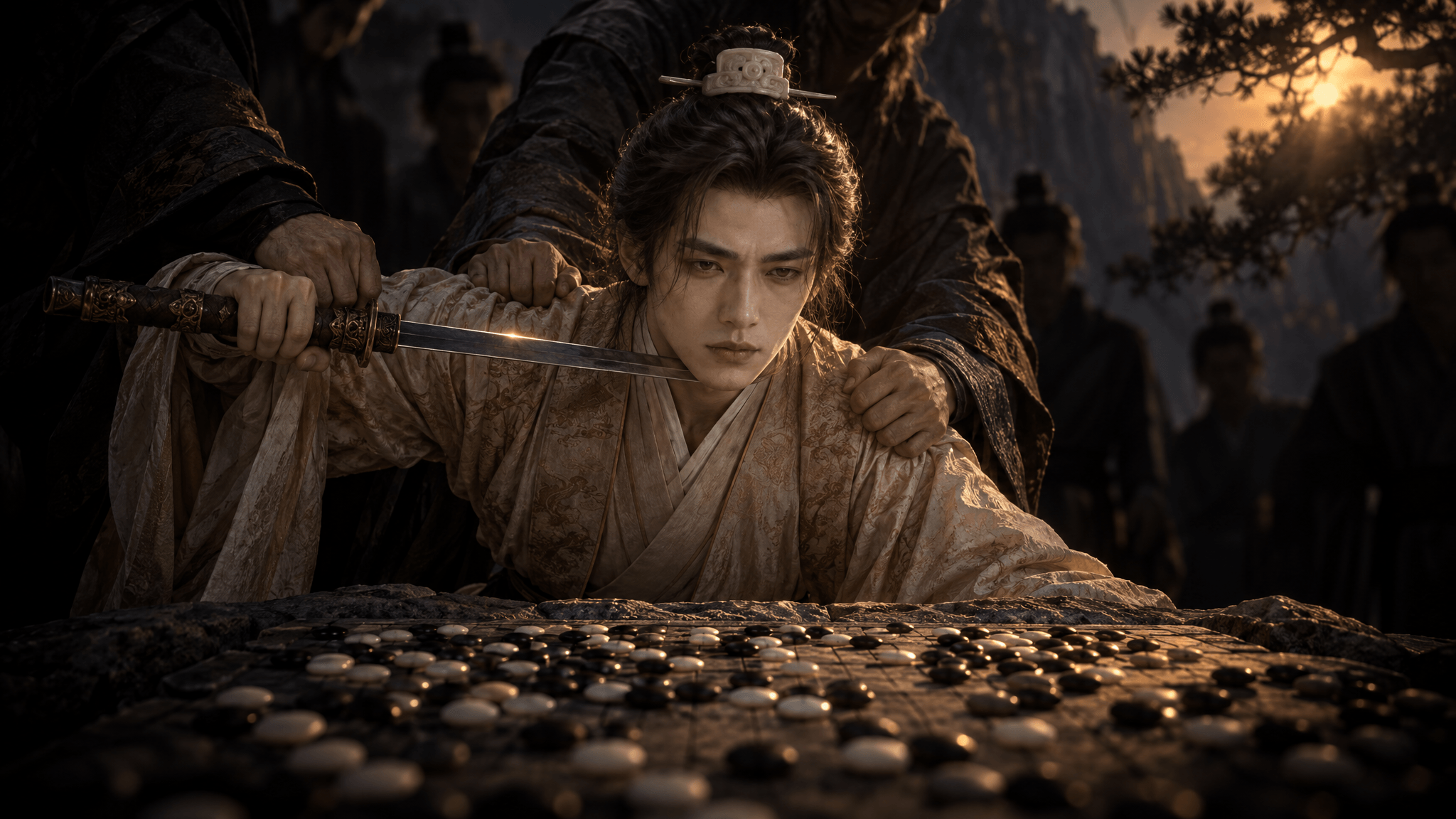
First, Duan Yanqing. He played very slowly — set down one stone, thought a while, then set down another. A man of surpassing intelligence, he went deeper and deeper into the game, and the deeper he went, the more he sank into it. Then Murong Fu. This young lord carried in his heart the great cause of restoring his kingdom, and calculated every move; calculating to the end, he was driven to the wall by the puzzle — the stones were dead, but the man was alive; staring at the board, his mind suddenly gave way, and he drew his sword to cut his own throat. The onlookers cried out and seized him just in time to stop the blade. A mere game of chess, and it could drive a man to suicide.
先说段延庆。他下得极慢——下一子,想一会,再下一子。他本是绝顶聪明的人,越下越深,人却越陷越进去。再说慕容复。这位公子心里装着复国大业,满盘算计,算到后来,竟被棋局逼到了绝处:棋是死的,人却是活的,他盯着棋盘,忽地心神大乱,拔剑便要往自己颈上抹。旁边人惊叫出手,才把剑拦了下来。不过是一盘棋,却能把人逼到自刎的地步。
This puzzle was no chess game at all — it was a mirror.
这珍珑哪是棋?它是一面镜子。
Chapter 3: One Stone with Eyes Shut — From Death, Life
第三回 闭眼落子,置之死地
Now, after Murong Fu had been saved, Duan Yanqing sat down before the board once more and took up the game again; halfway through this time, he was pressed flat against the board. He walked by tapping an iron staff on the ground, and now the staff in his left hand hung in midair, unable for a long while to come down. The armies in the puzzle pressed down on him from every side; the world spun before his eyes, his heart beat wilder and wilder — a few more moves, and his life itself would be left behind in that valley.
却说慕容复被救下后,段延庆又重坐盘前续局;这一回下到中盘,他整个人都贴在了棋盘上。他本以铁杖点地代步,此刻左手铁杖停在半空,久久落不下来。棋局里千军万马,都往他头上压;他只觉得天旋地转,一颗心越跳越乱,再下下去,这条命都要交代在这山谷里。
The masters in the valley all saw the danger, but none stepped forward — one step too near, and he might be dragged in himself. And it was then that one man moved. Xuzhu, the little monk no one had noticed, walked straight toward the board. There was no other thought in his heart but one — to save a life. Ordained as a monk from childhood, he was merciful by nature and could not bear to see a man die. He knew no chess and could not solve the puzzle; he knew only that if he did not act, the man before him would die.
谷中高手都看出了凶险,却没人上前——上前一步,说不定连自己也赔进去。就在这时候,一个人动了。谁也没注意过的小和尚虚竹,竟往棋盘边走了过去。他心里没别的念头,只有一样——救人。这小和尚自幼出家,以慈悲为怀,见不得人送命。他不懂棋,解不了局;他只知道再不出手,眼前这个人就要死了。
Before anyone could stop him, he stepped forward —
说时迟那时快,他一步上前——
"He reached into the box and took up a white stone."
— Demi-Gods and Semi-Devils, new revised edition 「伸手入盒,取过一枚白子」
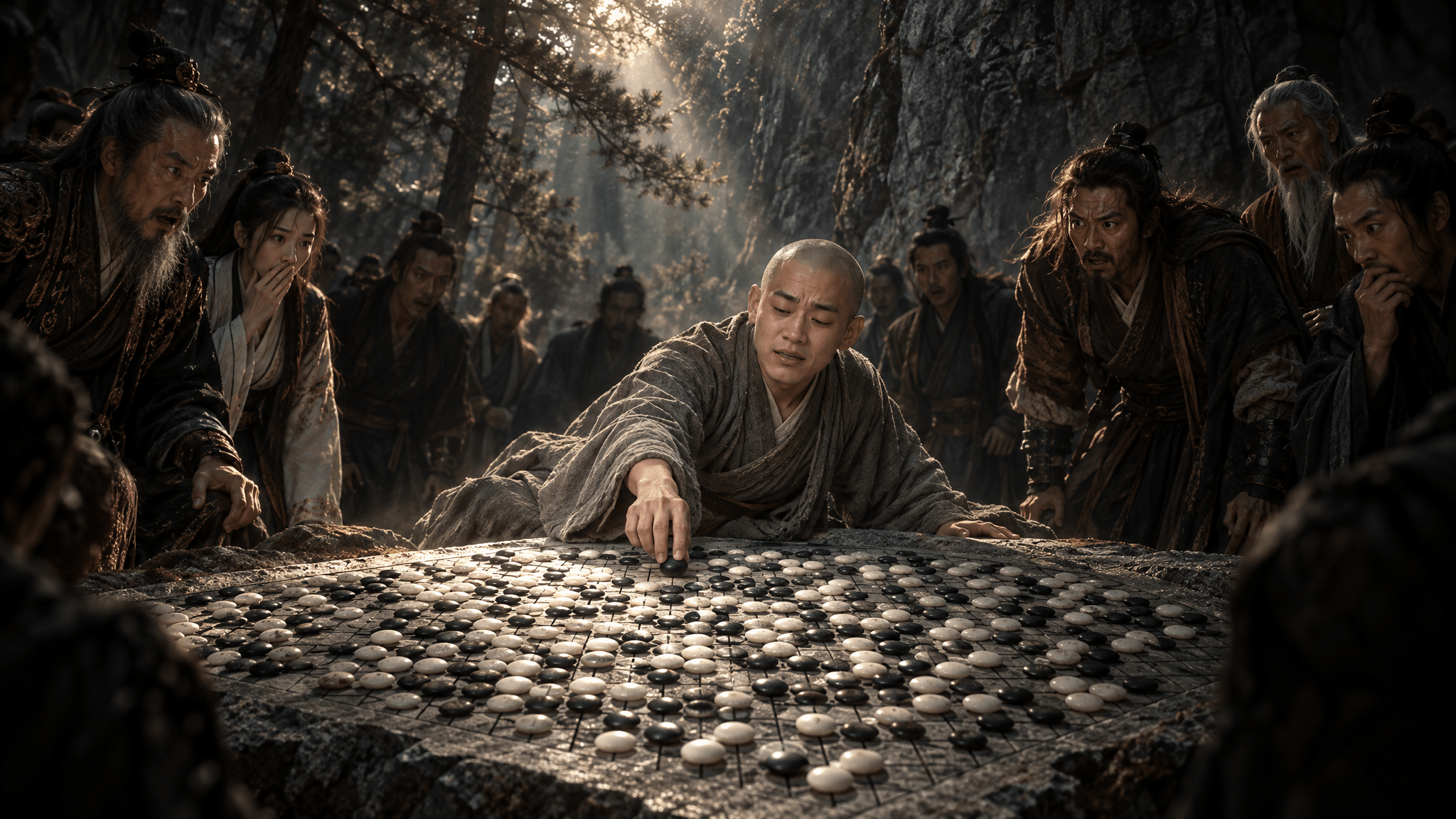
——《天龙八部》(新修版) The whole valley stood dumb: what was the little monk doing? They saw him shut his eyes and press the white stone down on the board at random. And it landed neither on a vital point nor on a fine one — for how could he know what was vital, what was fine? He played with his eyes shut, in pure blindness. The assembled masters cried out together: madness! That one stone filled in a great block of his own stones and killed them — before their eyes the white side was about to be wiped out by the black.
满谷的人都呆住了:这小和尚要干什么?只见他眼睛一闭,随手把这枚白子往棋盘上一按。这一按,不是落在要紧处,也不是落在妙处——他哪里懂得什么要紧、什么妙?他是闭着眼睛瞎下的。满场高手齐声惊呼:胡闹!这一子落下去,等于自己把一大片棋全填死了,眼见白棋便要给黑棋杀个精光。
And yet with that one move, the whole board came alive.
哪知这一按,满盘都活了。
The proverb of chess says the most feared move is the suicidal one. But this puzzle ran counter to all the laws of chess: when others played, every bid for life turned to death; with this one stone, Xuzhu cut off his own road to life, and by doing so trapped the black side to death in the middle. This is what it means — place an army on ground from which there is no retreat, and the soldiers will fight desperately to live. One line from the game says it best:
棋谚有云,下棋最怕的就是自杀一着。可这珍珑偏生与天下棋理相反:别人来下,处处求活,处处是死;虚竹这一子,自断生路,反倒把黑棋困死在当中。这叫作——把军队放在绝地,兵士反而拼死求生。棋盘上的一句话,说得最透:
"Only by placing yourself in the land of death can you come to life — one can but take the risk."
— Demi-Gods and Semi-Devils, revised edition 「置之死地而后生,只好冒一冒险。」
——《天龙八部》(修订版) First dead silence in the valley, then a roar of acclaim. Broken! The puzzle that the masters of the realm had fought over for a whole day was broken by a little monk who knew no chess, playing with his eyes shut. Who would believe such a story — and yet it happened before their eyes. Think on it: everyone there had come to win, each scheming to the last corner; and it was the one who did not want to win, who only wanted to save a life, that broke the game. Of the sicknesses of heart the puzzle brought to light, he had none — he coveted no victory, feared no death, and so the road to life found him on its own.
谷中先是一片死寂,接着轰然叫好。破了!这天下高手争了一整天的珍珑,被一个不懂棋的小和尚闭着眼睛破了。这事说出去都没人信,可它就发生在眼前。你想想:满场人都是冲着"赢"来的,个个机关算尽;偏是这个不想赢、只想救人的小和尚,把棋局破了。棋局照出的心病,他一样都没有——他不贪胜,不怕死,于是生路自己找上了他。
Chapter 4: The Old Man in the Hut — a Lifetime Given
第四回 屋中老人,倾囊相传
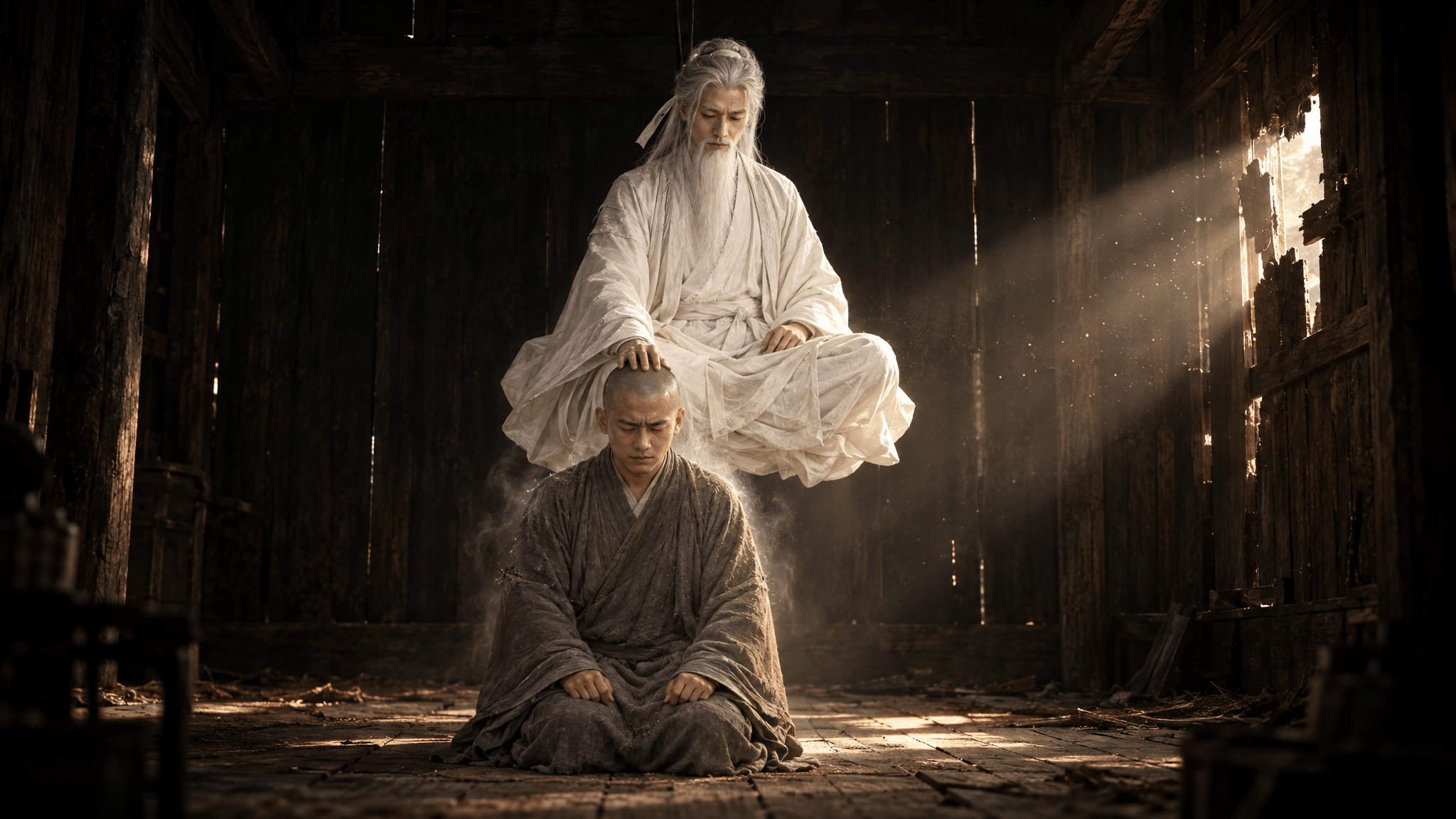
When the puzzle was broken, Su Xinghe came forward and looked Xuzhu up and down for a long while, then led him to a row of three wooden huts. In one of them sat an old man — held up by a black cord tied to a roof beam, so that he sat suspended in mid-air. This old man was none other than Su Xinghe's master, Wu Yazi, head of the Xiaoyao Sect. The Xiaoyao Sect was one of the most secret sects of the jianghu, its martial arts unfathomable; this old master had sat out the years in that hut, waiting for this day — for the one who could break the puzzle.
却说珍珑一破,苏星河走上前来,对着虚竹上上下下打量了好一阵,随即引他到了三间木屋前。木屋里坐着一位老人——一根黑绳从横梁上垂下来把他吊着,他就那样悬在半空里坐着。这老人不是别人,正是苏星河的师父,逍遥派的掌门,无崖子。逍遥派是江湖上一个极隐秘的门派,武功深不可测;这位老前辈在屋中枯坐多年,等的就是今日——等着那个破得珍珑的人。
Dazed, Xuzhu entered the hut, not knowing what was to come, and Wu Yazi, without asking leave, began pouring a lifetime of power into him. Men of the jianghu hold the inner force they have trained in their bodies dearer than life itself, and do not lightly pass it on; but this old man seemed to have arranged everything long ago, waiting only for this man to come. What he passed on to Xuzhu was a form of power called "Beiming true qi" — Beiming meaning the northern sea, for this qi was deep beyond sounding, just like that sea. How many years had the old man stored up this power? The answer would startle you:
虚竹迷迷糊糊进了屋,还不知要发生什么,无崖子已经不由分说,把一身功力往他身上传去。武林中人把身体里练出来的内力看得比性命还重,轻易不肯传人;这位老人却像是早把一切都安排好了,只等这个人来。他传给虚竹的,是一门叫"北冥真气"的功夫——北冥,说的是北方的大海,这真气深得见不着底,正合那海一样的意思。老人这一身功力攒了多少年?说出来吓人一跳:
"Seventy-odd years of his master's diligent cultivation — how could that be anything ordinary?"
— Demi-Gods and Semi-Devils, revised edition 「师父七十余年的勤修苦练,岂同寻常?」
——《天龙八部》(修订版) The inner power of more than seventy years, in one night, passed entire into this little monk's body.
七十多年的内力,一夜之间,全进了这个小和尚的身子。
With the power passed on, the old man had still more to say. He spoke of a wrong that had weighed on him for years: among his disciples there had once been a traitor named Ding Chunqiu. This Ding Chunqiu was the very master of the Xingxiu Sect — that old monster of Xingxiu you heard of in earlier chapters. He had done a deed of the greatest wickedness: betrayed his sect and plotted against his master. Speaking of him, Wu Yazi cursed him as the vilest of villains, one who had dared to think of betraying his master and his school. The old man laid down a rule for Xuzhu: this Xiaoyao Sect must one day cleanse its own house, and never allow the traitor to go free. Of the tangled old debts behind this, we say nothing for now; remember only this — from this moment, the grudge against Ding Chunqiu had come to rest on the little monk's shoulders.
传完了功力,老人还有话交代。他说起一件压了多年的恨事:他门下曾出了一个叛徒,名叫丁春秋。这个丁春秋,就是星宿派的掌门——前几回你听过的那个星宿老怪。此人做下了大逆不道的事:背叛师门,谋害师父。无崖子提起他,骂他是天底下最恶的恶棍,竟敢起欺师灭祖之心。老人立下一条门规传给虚竹:逍遥派这门,日后定要清理门户,绝不许叛徒逍遥法外。这里头千丝万缕的旧账,此时先按下不表,你只记着一样:从这一刻起,丁春秋这桩恩怨,已经落到小和尚肩上。
His instructions done, Wu Yazi took a ring from his robe and gave it to Xuzhu, passing on with it the seat of sect leader. Last of all, he brought out a painted scroll and unrolled it: on it was a woman of surpassing beauty. The old man pointed to the woman in the painting and gave Xuzhu other urgent instructions — to seek out the woman in the picture. By now Xuzhu's mind was in a whirl, and all he could do was keep nodding.
交代罢了,无崖子又从怀中取出一枚指环,交给虚竹,连带着掌门的位子,一并传了。最后,他取出一幅画卷,展开来,画上是一个极美的女子。老人指着画中人,另有要紧的话叮嘱,让虚竹照着画去找人。虚竹此时脑子里乱成一团,只记得自己连连点头。
A little monk who swept floors and struck bells in a temple — in one night he gained seventy years of power, became head of a sect, and carried on him a ring and a portrait of a beauty. No tale of marvels could invent stranger luck than this.
一个在寺里扫地敲钟的小和尚,一夜之间,得了七十年的功力,当了一派的掌门,怀里还揣着一枚指环、一幅美人图。天下再离奇的话本,也写不出这样的怪运。
Chapter 5: Heaven-Sent Fortune — and a Longing for Home
第五回 泼天造化,只想回寺
When Xuzhu came out of the hut with this heaven-sent fortune upon him, he was dazed from head to foot. Any other young man given such an encounter would have leapt for joy; he felt no joy, only worry. What was in his heart was still the bell of the temple, the incense, the plain gruel. He was a monk of Shaolin — and now he was head of the Xiaoyao Sect. What was he to make of it? All he wanted was to go back to Shaolin and be a little monk again.
却说虚竹得了这一身泼天的造化,出得屋来,浑身上下还是懵的。旁的少年人得了这等奇遇,怕不欢喜得跳起来;他却不欢喜,只发愁。他心里头想的,还是寺里的钟声、香火、清粥。他是少林寺的和尚,如今却当上了逍遥派的掌门——这算怎么回事?他只想回少林,仍旧做他的小和尚。
But some things, once they come to your door, no longer ask whether you want them. Xuzhu took his leave of the company and went east alone, turning over in his mind the road back to Shaolin. After some days, as the light was failing, he saw far ahead in the wild hills a patch of firelight. In a wilderness with no one about, whence such a fire?
可有些事,一旦找上门来,就由不得你想不想。虚竹辞了众人,独自往东走,心里盘算着回少林的路。走了几日,天将黑时,远远望见前头荒山里一片火光。旷野无人,哪来的火?
He should have gone around it. A little monk carrying seventy years of power, the headship of a sect, a ring, and a scroll had trouble enough without walking toward it. But he had seen the shadows moving beneath that firelight — so many men, gathered in so deep a night.
他本该绕开走。一个小和尚,身上背着七十年的功力、一派的掌门、一枚指环、一幅画,躲是非还躲不过来。可他看见了那火光底下晃动的人影——那样多的人,聚在那样深的夜里。
A little monk, walking headlong into a firelight. What waited in that firelight was no road, but a hemp sack with a person in it. Listen to the next chapter.
一个小和尚,一头撞进一片火光里去。那火光里等着的,不是路,是一只装人的麻袋。欲知后事如何,且听下回分解。