——面向中文学习者的文化导读
A cultural guide for learners of Chinese.
如果让我只选一个金庸人物,我会选萧峰。
If I could choose only one Jin Yong character, I would choose Xiao Feng.
这并不意味着郭靖不伟大,也不意味着令狐冲不够“侠”。恰恰相反,在我看来,他们三个人都是真正的侠:都忠于自己心中的义气,都愿意为别人承担代价,也都没有把力量变成欺压弱者的工具。
That does not make Guo Jing less great, or Linghu Chong less heroic. To me, all three are true xia: they remain loyal to their own sense of righteousness, accept a cost for other people, and refuse to turn power into a tool for bullying the weak.
我更愿意把他们看成“侠之大者”的三种可能,而不是高低有别的三层等级。
I prefer to see them as three possibilities of the great xia, not as a simple ranking.
郭靖是把责任扛到国家和百姓身上的人;萧峰是把仁心推过族群边界的人;令狐冲则是在日常的人和事面前,坚持明辨是非、重情重诺、保持本心的人。
Guo Jing carries responsibility for a country and its people. Xiao Feng extends compassion beyond ethnic boundaries. Linghu Chong keeps his moral clarity in immediate human situations, remaining loyal to friendship, promises, and his own conscience.
一、郭靖:把“侠”变成道德标准
1. Guo Jing: turning xia into a moral standard
我第一次真正理解郭靖,不是在他学会降龙十八掌的时候,而是在他一次次选择留下来的时候。
I first truly understood Guo Jing not when he mastered the Eighteen Dragon-Subduing Palms, but when he chose, again and again, to stay.
这里的“留下来”,不是简单地站在原地。郭靖本来可以留在蒙古,享受成吉思汗的信任和功名;也可以在襄阳危急时带着黄蓉离开,先保全自己的性命。但当他看见战争会把普通百姓卷进去,他选择回到襄阳,和守城的人一起面对蒙古大军。
By “stay,” I do not mean simply remaining in one place. Guo Jing could have stayed in Mongolia, enjoying Genghis Khan’s trust and the rewards of status. When Xiangyang was in danger, he could also have left with Huang Rong and saved his own life. But when he saw that war would swallow ordinary people, he chose to return to Xiangyang and face the Mongol army with those defending the city.
郭靖并不聪明,也不擅长把话说得漂亮。他的性格厚重、木讷,甚至常常显得笨拙。但正因为如此,他的选择很少来自表演。
Guo Jing is not clever, and he is not good at making elegant speeches. He is solid, slow, and sometimes awkward. That is precisely why his choices rarely feel like performances. Once he decides that something matters, he gives himself to it.
他认定百姓的性命比个人恩情重要,就会在金兵烧杀掳掠村庄时纵马冲上去;他认定城外的难民必须进城,就会纵马直驰城门,喝令守将开城;他认定守城是自己的责任,就算知道未必能获胜,也不先替自己寻找退路。
When he decides that civilians’ lives matter more than personal gratitude, he rides straight at the soldiers who are burning a village. When he decides that the refugees outside Xiangyang must be let in, he gallops up to the gate and orders it opened. When he decides that defending the city is his responsibility, he does not first look for an escape route, even though victory is uncertain.
金庸借郭靖之口,把“侠”分成了两种尺度。他对杨过说,行侠仗义、济人困厄固然乃是本份,但这只是“侠之小者”;真正需要牢记的,是“为国为民,侠之大者”这八个字。
Through Guo Jing, Jin Yong gives us two scales of xia. Helping people in trouble is a basic duty, but that is only the “lesser xia” (侠之小者, xiá zhī xiǎo zhě). The true “great xia” (侠之大者, xiá zhī dà zhě) is the one who acts “for the country and the people” — in the novel’s own eight characters, 为国为民,侠之大者.
这句话常被误记为《射雕英雄传》的句子,其实出自《神雕侠侣》第二十回。它不是一句漂亮的口号,而是郭靖一生的行动准则。
This line is often misremembered as coming from The Legend of the Condor Heroes. It actually appears in Chapter 20 of The Return of the Condor Heroes. It is not a pretty slogan; it is the principle that governs Guo Jing’s life.
文化注
Culture note
郭靖在蒙古长大,受过成吉思汗的恩,也曾为蒙古作战。他并不是一开始就拥有清晰的政治答案。
Guo Jing grew up among the Mongols, received Genghis Khan’s favor, and once fought for the Mongol side. He did not begin with a perfectly clear political answer.
真正重要的是,当私人恩情、军事命令和百姓的生命发生冲突时,他愿意重新判断。
What matters is that when private gratitude, military orders, and the lives of ordinary people came into conflict, he was willing to judge again.
他最终守襄阳,不是因为南宋朝廷值得被神化,而是因为城里有百姓。
He ultimately defended Xiangyang not because the Southern Song court deserved to be romanticized, but because ordinary people lived inside the city.
黄蓉问他,襄阳重要,还是他们的情爱重要;郭靖回答“国事为重”。这句话听起来很重,但它并不是把爱情看得低,而是承认有些时候,个人幸福不能成为逃避责任的理由。
Huang Rong asked him whether Xiangyang mattered more than their love, and Guo Jing answered, “The affairs of the country come first.” It is a severe answer, but not because he considers love unimportant. He recognizes that personal happiness cannot always be used as an excuse to escape responsibility.
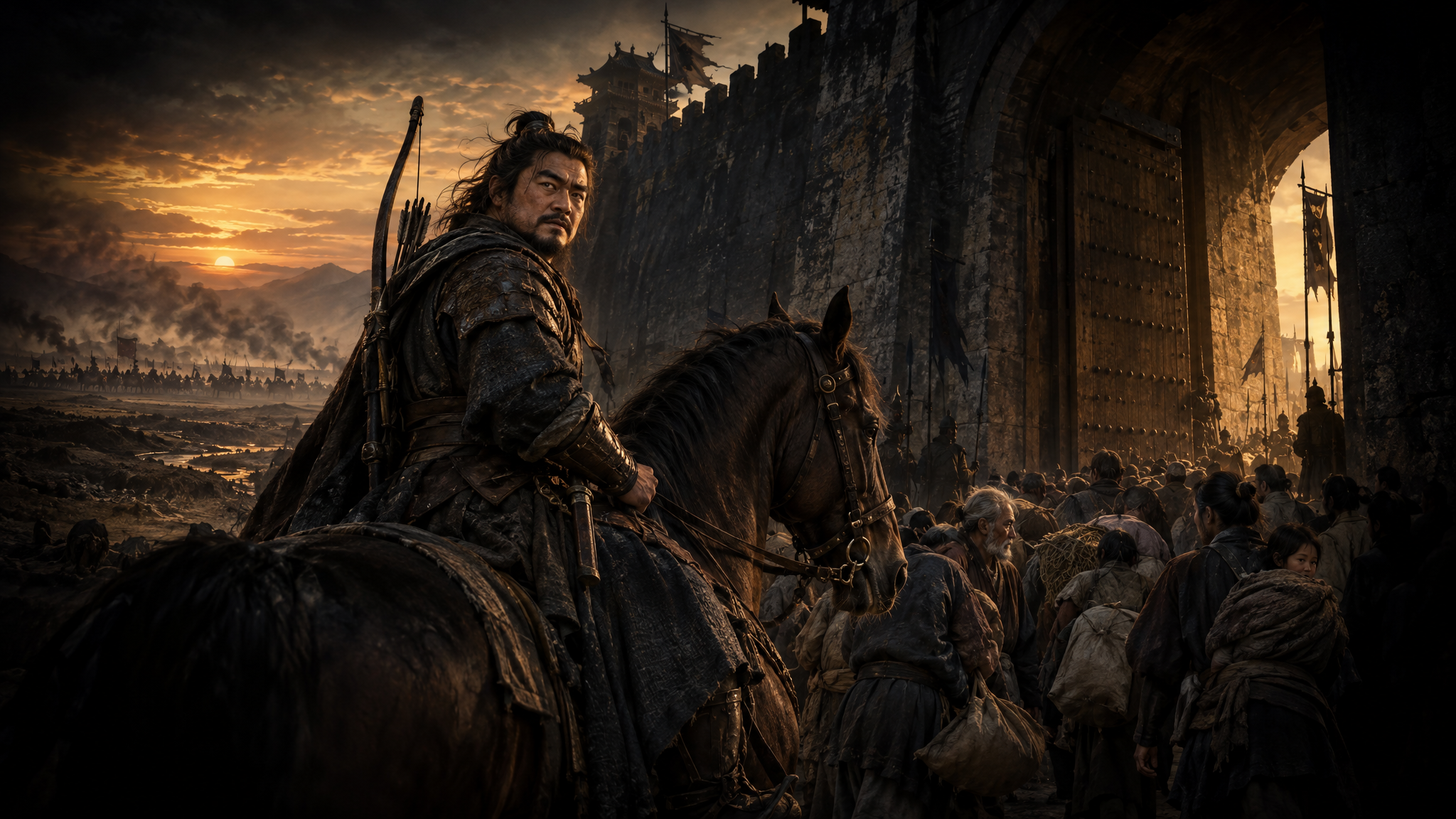
我很喜欢郭靖的一点,是他并不把“为国为民”理解成宏大的自我想象。他见到金兵烧村、杀人、掳掠百姓,会直接冲上去。襄阳城外数千百姓被拒之门外时,他纵马到城门下喝令开城——“便有一两个奸细,岂能因此误了数千百姓的性命?”
What I admire in Guo Jing is that he does not treat “for the country and the people” as a grand fantasy about himself. When he sees soldiers burning villages and attacking civilians, he acts. When thousands of refugees are shut outside Xiangyang, he gallops to the gate and orders it opened, telling the defenders that a single spy is no reason to cost thousands of ordinary people their lives.
他的侠很直,也很重。他未必最会权衡,但他愿意把身体放到责任最前面。
His xia is direct and weighty. He may not be the best strategist, but he is willing to put his body at the front of responsibility.
对我来说,郭靖是国之栋梁,是民族的脊骨。他让“侠”不只是一种个人魅力,也成为一个社会在危难中可以依靠的道德标准。
To me, Guo Jing is a pillar of the nation, a backbone for his people. He turns xia from personal charisma into a moral standard a society can rely on in times of crisis.
二、萧峰:把“义”放在族群之上
2. Xiao Feng: placing righteousness above ethnicity
如果说郭靖是我心中“为国为民”的典范,那么萧峰就是我最喜欢的英雄豪杰。
If Guo Jing is my model of “for the country and the people,” then Xiao Feng is my favorite hero.
我喜欢他,不只是因为他武功盖世、行事豪爽,更因为他始终不肯让身份替自己完成判断。
I love him not only because he is immensely powerful and boldly direct, but because he refuses to let identity make his moral decisions for him.
萧峰从小以汉人的身份长大,成为丐帮帮主,被中原武林视为英雄。后来,他发现自己是契丹人。昨天还与他喝酒结义的人,今天突然要求他证明自己是否值得信任。
Xiao Feng grows up as a Han Chinese man and becomes leader of the Beggars’ Sect, celebrated as a hero by the Central Plains martial world. Then he learns that he is Khitan. People who drank with him and swore brotherhood yesterday suddenly demand proof that he can still be trusted.
最残酷的地方在于:他的品格没有改变,别人看他的方式却改变了。
The cruelest part is that his character has not changed. Only the way others look at him has changed.
萧峰没有因此简单地转投辽国,也没有把汉人的排斥变成对汉人的仇恨。
Xiao Feng does not simply turn to Liao, nor does he turn Han prejudice into hatred of all Han people.
他见过宋兵越境掳掠契丹边民,也见过辽兵“打草谷”时掳掠宋人百姓。两边的被俘者脸上,是同一种恐惧。他终于明白,汉人和契丹人都可能成为战争中的受害者。
He sees Song soldiers raid Khitan villages, and later he sees Liao soldiers “beat the grass” for grain, plundering Han villages. In both, he sees the same fear on the faces of those taken. He understands that Han and Khitan people can both become victims of war.
把这一点说得最清楚的是阿朱:“汉人是人,契丹人也是人,又有什么贵贱之分?”智光大师留下的偈语——万物一般,众生平等,汉人契丹,一视同仁——几乎就是他一生的注脚。
It is A Zhu who says the line that becomes the heart of his life: “Han people are people, and Khitan people are people too — how could either be nobler or baser than the other?” The verse left by Master Zhiguang — all things are one, all living beings are equal, Han and Khitan alike — almost serves as the footnote to that.
萧峰的“义”还体现在他对具体的人。
Xiao Feng’s righteousness also appears in his treatment of particular people.
阿朱重伤时,他孤身带她闯入聚贤庄求医;面对段正淳,他在动手之前先当面质问,要对方亲口承认罪责,并令段正淳的属下退开,不愿牵连无辜。
When A Zhu is badly wounded, he carries her alone into Juxian Manor to seek the one doctor who can save her. Before he raises a hand against Duan Zhengchun, he questions him face to face and makes him answer for what he has done — and orders Duan’s own subordinates to step back, refusing to involve the innocent.
他不把恩怨拿来做买卖,也不因对方属于“敌方”就取消对方作为人的资格。
He does not turn revenge into a bargain, and he does not cancel another person’s humanity simply because that person belongs to the “enemy.”
所以,结局才会如此悲壮。雁门关前,一边是来救他的中原群豪,一边是他名义上的故国辽军。只要他选择其中一边,另一边就会把他视作叛徒。
That is why the ending is so tragic. At Yanmen Pass, one side is the Central Plains heroes who come to rescue him; the other is the Liao army of his ancestral homeland. Whichever side he chooses, the other will call him a traitor.
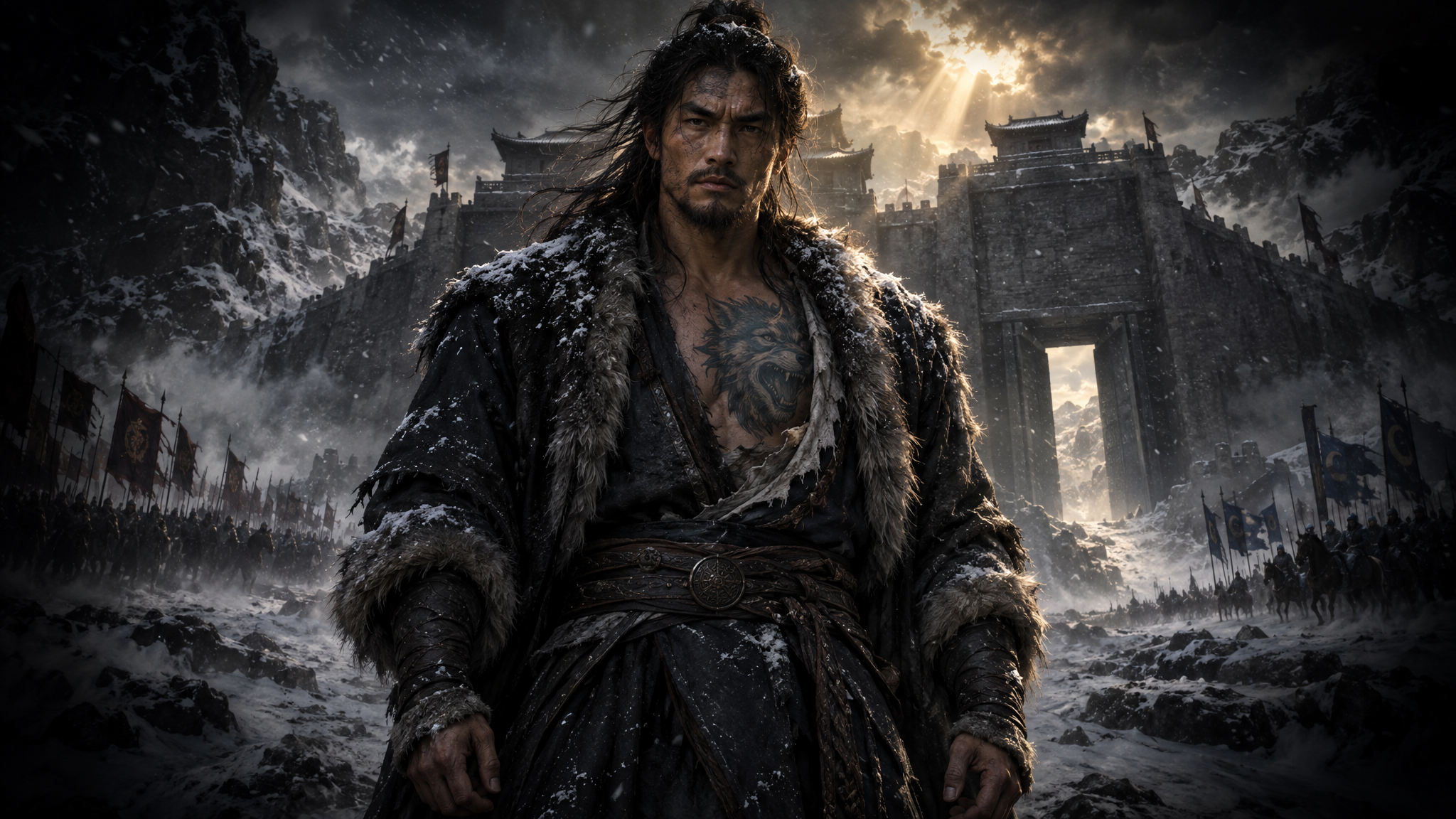
他最后逼辽帝折箭为誓、退兵罢战,然后用那两截断箭结束了自己的生命。有人说他是汉人的英雄,有人说他是契丹的罪人;连耶律洪基心里也在想,他到底于大辽是有功还是有过。
In the end he forces the Liao emperor to break an arrow in pledge and call off the invasion — and then ends his own life with the two broken halves. Some call him a hero of the Han; others call him a traitor to the Khitan. In his own heart, even Emperor Yelü Hongji cannot decide whether Xiao Feng served Liao or wronged it.
而这正是我心中萧峰最完美的地方:他的义没有被任何一方收编。他不是因为没有立场才悲剧,而是因为他的仁心无法容纳那种只允许一方活下来的立场。
That is precisely what makes Xiao Feng perfect in my eyes: his righteousness cannot be recruited by either side. His tragedy does not come from having no principles, but from having a compassion too large for any principle that allows only one side to live.
三、令狐冲:不做大侠,也可以是真汉子
3. Linghu Chong: one need not be a great hero to be a true man
说到令狐冲,我不太愿意用“侠之小者”把他轻轻盖过去。
When it comes to Linghu Chong, I do not want to dismiss him simply as a “lesser xia.”
郭靖和萧峰处在国家战争、族群冲突和时代巨变的中心,他们被命运推到了必须承担天下的位置。令狐冲没有处在那样的环境里。他面对的主要是门派权力、正邪标签、师门恩怨和身边人的生死。
Guo Jing and Xiao Feng stand at the center of war, ethnic conflict, and historical upheaval. Fate pushes them toward responsibility for the world. Linghu Chong does not live in that kind of situation. His tests are the power struggles of sects, labels of orthodox and demonic, the loyalties and grudges of his own school, and the lives of the people around him.
但这不说明他的侠比较小。一个普通人如果能够像令狐冲那样,在复杂的人情和权力中保持明辨是非,已经非常了不起。
That does not make his xia smaller. For an ordinary person to remain morally clear amid complicated relationships and power games, as Linghu Chong does, is already extraordinary.
令狐冲是金庸亲自点明的“天生的隐士”。他对权力没有兴趣,重视个人自由和个性的舒展。他不想做掌门,也不想成为另一个任我行、岳不群或左冷禅。
Jin Yong himself calls Linghu Chong a “natural hermit.” He has little interest in power and values personal freedom and the unfolding of individual character. He does not want to become a sect leader, or another Ren Woxing, Yue Buqun, or Zuo Lengchan.
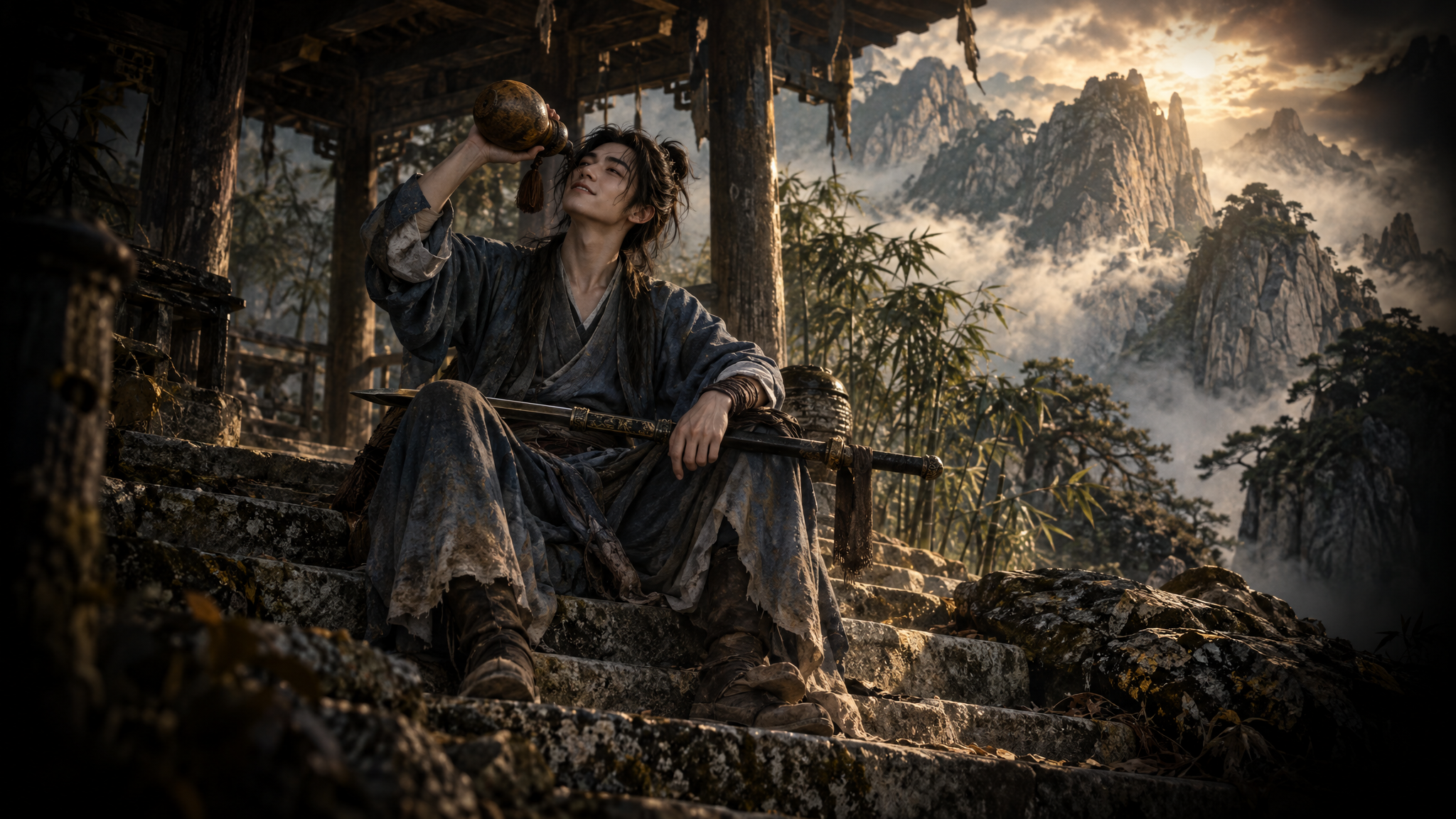
但自由不等于任性。嵩山派费彬一剑杀了无辜幼女曲非烟时,令狐冲挡在前面,当面质问。
But freedom is not the same as selfishness. When Fei Bin of the Songshan Sect kills Qu Feiyan — a girl with no part in any of it — Linghu Chong stands in the way and says so to his face.
他问那位自居侠义道的人:欺辱身负重伤之人,算不算侠义?残杀无辜幼女,算不算侠义?费彬答不上来。不久之后,他死在莫大先生剑下。
He turns to the man who calls himself a follower of the righteous way and asks: does bullying someone already gravely wounded count as 侠义? Does killing an innocent young girl count as 侠义? Fei Bin has no answer. He is killed not long after by Mo Da.
这就是我喜欢令狐冲的原因。他不先看对方属于正派还是魔教,而是先看眼前这件事对不对。
That is why I like Linghu Chong. He does not first ask whether someone belongs to the orthodox sects or the demonic cult. He first asks whether the act in front of him is right.
他与向问天素不相识,却愿意共饮、共担围攻;他答应别人的事,往往宁可自己受苦,也不肯轻易反悔。
He drinks with Xiang Wentian, a man he has never met, and stands beside him when they are surrounded. Once he gives his word, he would rather suffer himself than casually break it.
他也有放浪、好酒、任性的一面。他看淡正邪之分,容易得罪那些把门派名声看得比人的性命更重要的人。
He is also unruly, fond of wine, and sometimes self-indulgent. He takes orthodox and demonic labels lightly, which naturally offends people who value sect reputation above human life.
但正因为他不完美,他的选择才更接近普通人的难度:没有郭靖那样宏大的使命,也没有萧峰那样撕裂天地的身世,却仍然在具体的时刻选择义气。
Yet this imperfection makes his choices closer to the difficulty faced by ordinary people. He has neither Guo Jing’s grand mission nor Xiao Feng’s world-shattering identity crisis, but he still chooses loyalty and righteousness in concrete moments.
令狐冲的侠,不是建功立业,而是不让自己的自由变成别人的压迫;不是号令天下,而是在别人被不公对待时站出来;不是永远正确,而是错了以后仍然愿意为自己的选择负责。
Linghu Chong’s xia is not about founding an empire or commanding the world. It is about refusing to turn his freedom into oppression, standing up when someone is treated unjustly, and taking responsibility for his choices even when he is not always right.
四、三个人,三种“忠于义”
4. Three people, three ways of remaining loyal to 义
我不认为郭靖、萧峰、令狐冲可以排成一条简单的高低顺序。
I do not think Guo Jing, Xiao Feng, and Linghu Chong can be placed on a simple ladder of greatness.
郭靖的义,是先有明确的责任,再把自己交给责任。他是“为国为民”的大侠,是国之栋梁。
Guo Jing’s righteousness begins with a clear responsibility, and then gives himself to it. He is the great xia who acts “for the country and the people,” a pillar of the nation.
萧峰的义,是先有仁心,再拒绝让族群替自己划定善恶。他把汉人与契丹人都当作人,因此注定成为两边都无法完全接纳的悲剧英雄。
Xiao Feng’s righteousness begins with compassion, then refuses to let ethnicity decide who is good or evil. Because he sees both Han and Khitan as human, he becomes a tragic hero neither side can fully claim.
令狐冲的义,是忠于具体的人和具体的承诺。他没有被推到守城或止战的位置,但他在自己的江湖里明辨是非、重情重诺、随性而不伤人。
Linghu Chong’s righteousness is loyalty to particular people and particular promises. He is not pushed into defending a city or stopping a war, but within his own jianghu he remains clear-sighted, loyal, free-spirited, and unwilling to hurt others.
如果郭靖代表一个民族在危难中挺直的脊骨,萧峰代表一个人超越族群的仁心,那么令狐冲代表的,或许是普通人能够实践的那部分侠。
If Guo Jing represents the backbone of a people standing upright in crisis, and Xiao Feng represents compassion beyond ethnic boundaries, then Linghu Chong represents the part of xia ordinary people can practice.
不跟着口号作恶,不因为群体标签就仇恨别人,在可以装作没看见的时候,仍然站出来。
He refuses to do wrong in the name of slogans, refuses to hate because of group labels, and steps forward when it would be easier to look away.
我最喜欢的萧峰,和我们能够成为的令狐冲
The Xiao Feng I love, and the Linghu Chong we might become
我最喜欢萧峰,因为他像一个无法被现实驯服的答案。他正直、勇敢、有情有义,也愿意为自己的判断付出生命。
Xiao Feng is my favorite because he feels like an answer reality cannot tame. He is upright, brave, loyal, and willing to pay with his life for his judgment.
我敬佩郭靖,因为他在最需要有人承担的时候,从不把责任推给别人。
I admire Guo Jing because when responsibility must be carried, he never pushes it onto someone else.
而我也愿意替令狐冲说一句:我们中的大多数人,不会守襄阳,也不会站在雁门关前逼迫皇帝止战。
I also want to speak up for Linghu Chong. Most of us will never defend Xiangyang or stand at Yanmen Pass forcing an emperor to stop a war.
能够在日常生活里明辨是非、珍惜朋友、守住承诺,同时不让自己的自由伤害别人,已经是非常了不起的“真汉子”。
To distinguish right from wrong in ordinary life, value our friends, keep our promises, and remain free without harming others — that is already a remarkable way to be a true man.
金庸笔下的侠,最终不是三种性格模板,而是三个问题:
The xia in Jin Yong’s novels is not ultimately three personality templates, but three questions.
当责任来到面前,我愿不愿意留下?
当所有人要求我站队,我还能不能看见具体的人?
当没有人要求我成为英雄,我是否仍然愿意做对的事? When responsibility arrives, am I willing to stay?
When everyone demands that I choose a side, can I still see individual people?
When no one asks me to be a hero, am I still willing to do what is right? 郭靖、萧峰和令狐冲,分别给出了自己的答案。对我来说,这三种答案合在一起,才是金庸笔下完整的“侠”。
Guo Jing, Xiao Feng, and Linghu Chong each give his own answer. To me, those three answers together form the complete idea of the xia in Jin Yong.
下一篇 · Next
Next · 下一篇
如果说这三个人是三种答案,那么接下来要问的是:是什么给了侠客行动的力量?下一篇我们看武功的三种境界——以及金庸为什么不关心谁最强,而关心一个人拥有力量之后会做什么。
If these three are three answers, the next question is what gives a xia the power to act on any of them. Next: the three levels of martial arts — and why Jin Yong cares far less about who is strongest than about what a person does once he holds power.